flower, gardening

Yellow Queen

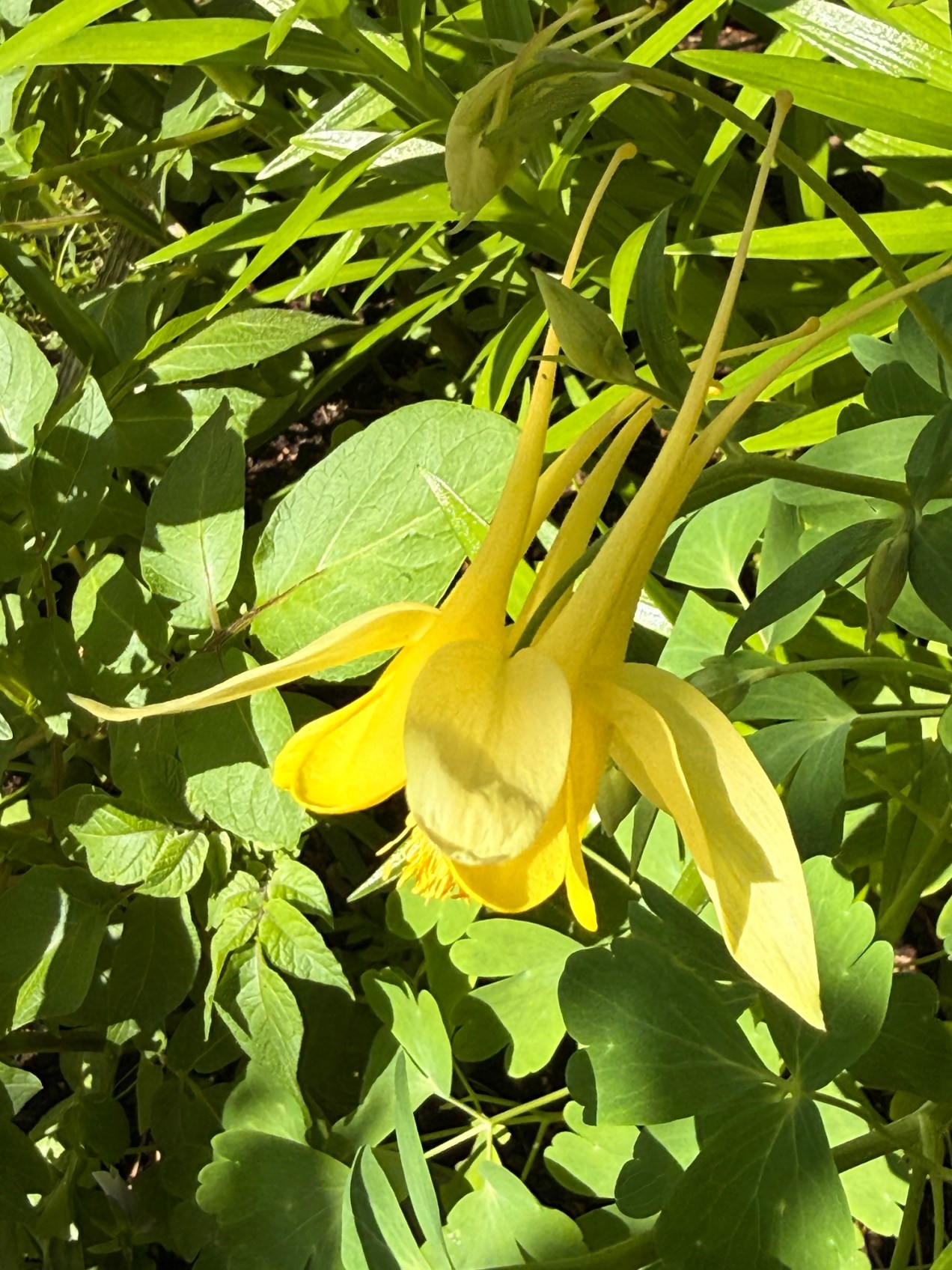
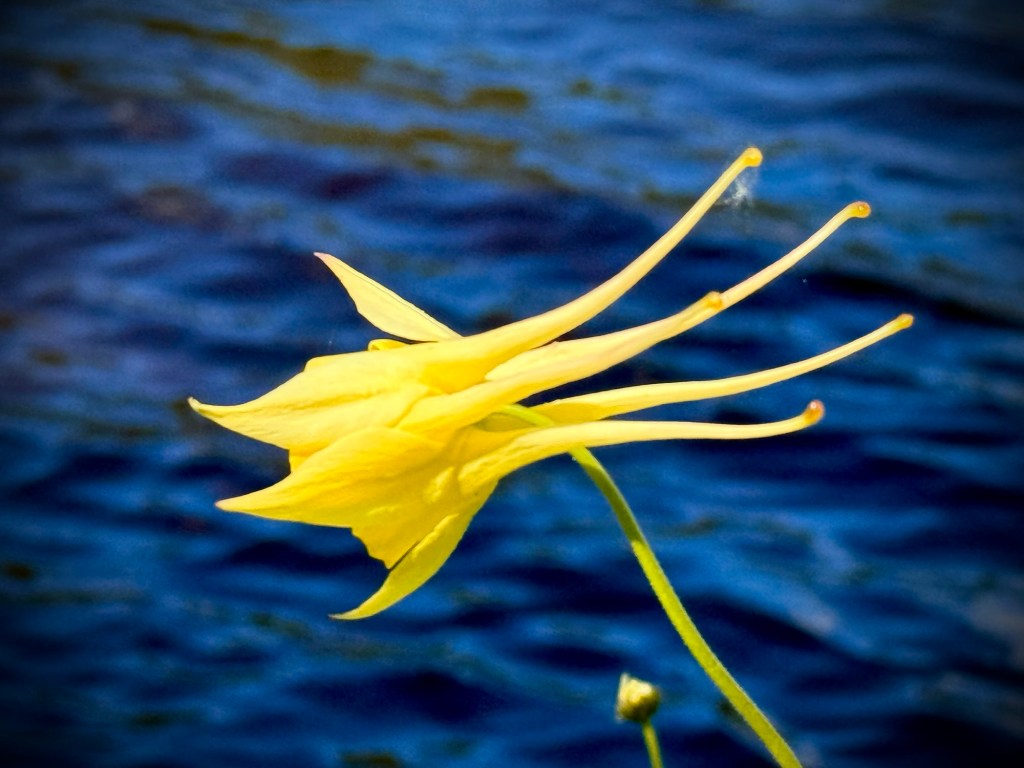
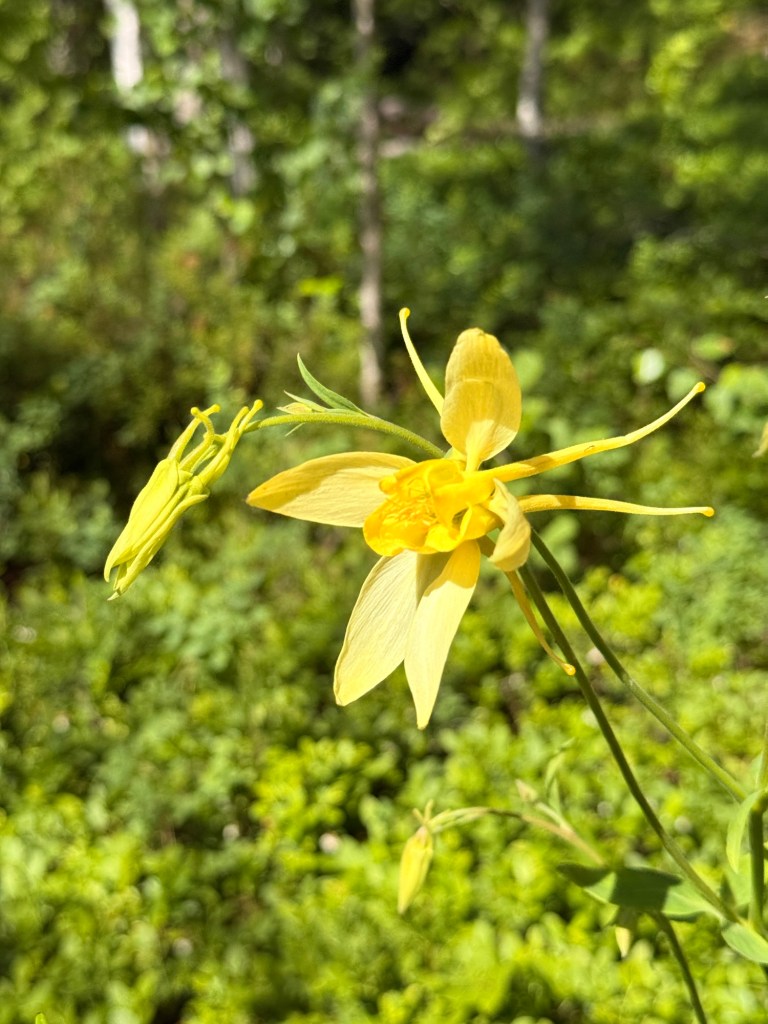
If I had to name the most successful columbine at the summer cottage, it would certainly be Aquilegia chrysantha ‘Yellow Queen’. It has been growing here for nearly eight years now and still seems just as happy as ever. Some plants come and go, while others struggle with the conditions, but Yellow Queen has quietly settled in and made itself at home.

What I especially love about this flower is its shape. The blooms are unlike any other columbine I grow. Their long, elegant spurs give them a graceful appearance, almost as if they are floating above the foliage. The bright yellow colour is cheerful without being overwhelming and stands out beautifully in the gentle light of a northern summer.

For a long time now, Yellow Queen has shared its place with the lilies. Every year they bloom together, creating a combination that I always look forward to seeing. The lilies provide bold structure while the airy flowers of the columbine bring a lighter touch. After all these years they seem perfectly suited to one another.

One reason I appreciate Yellow Queen so much is its reliability. Columbines can sometimes be short-lived, but this variety has proved remarkably persistent. It returns year after year with little fuss, producing plenty of flowers and maintaining its place despite the challenges of cottage conditions. Perhaps that is why it has become one of my favourites.

I have also managed to establish a second plant near the lake. It is still finding its place there, but I hope that in time it will grow as vigorously as the original clump. It would be lovely to see Yellow Queen spread to other corners of the cottage surroundings. The flower is too beautiful to remain in only one spot.

For now, though, I am simply happy that the old plant continues to thrive. Each summer it reminds me that some garden companions are worth waiting for. Year after year, Yellow Queen returns with its golden flowers, as dependable and beautiful as ever.
Standard
flower, gardening

ILO

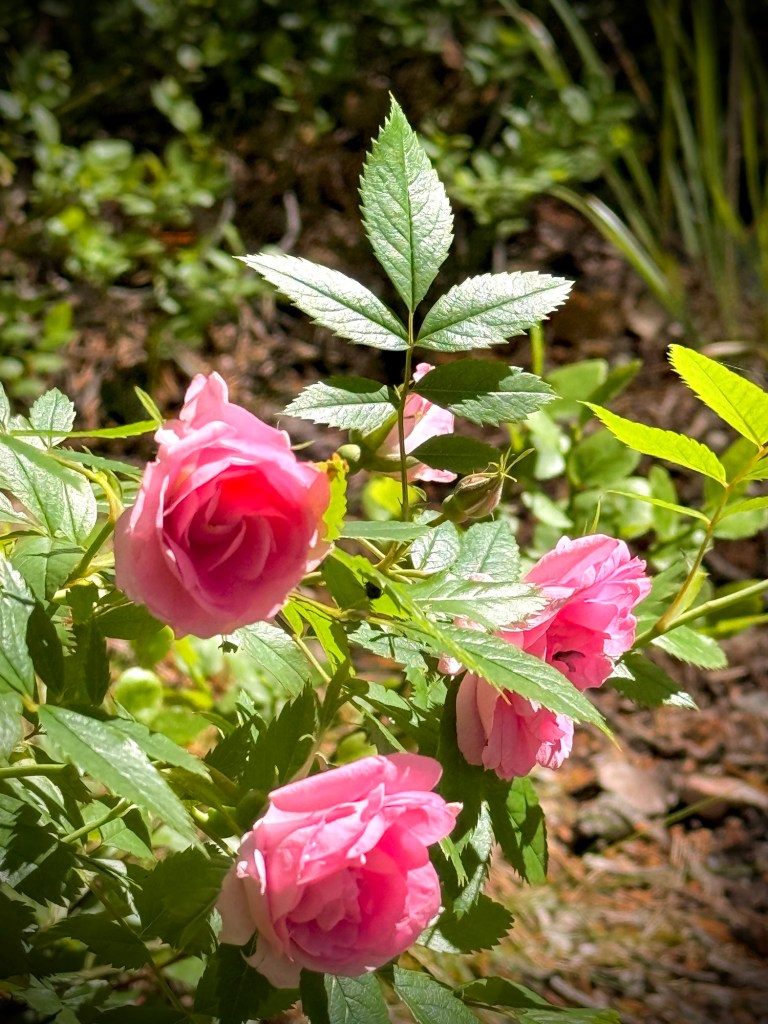
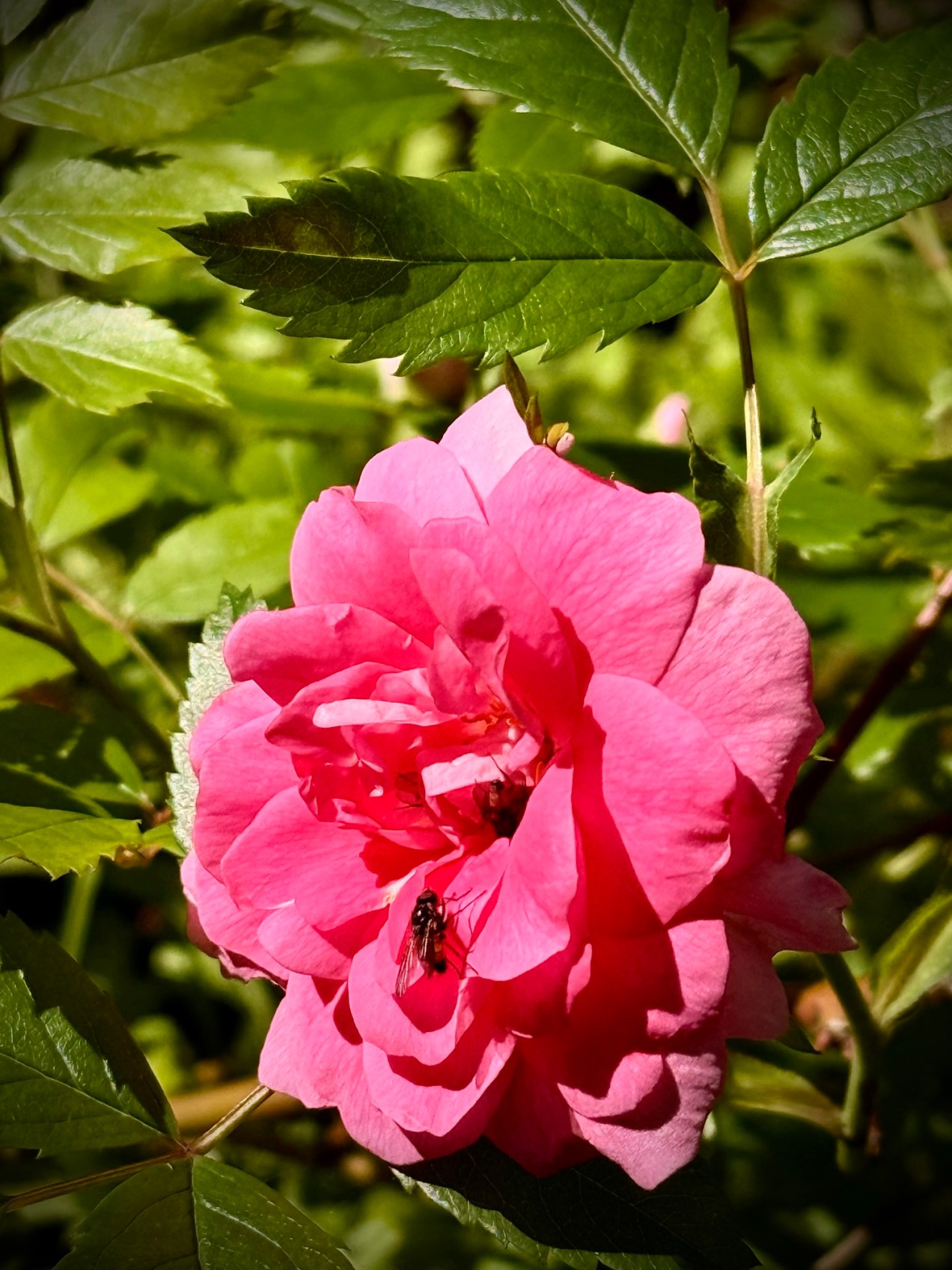
This spring, I planted a new rose at our summer cottage: Rosa ‘ILO’. Adding a new plant is always a small adventure. No matter how much information you read beforehand, the real story begins only after the plant finds its place and starts growing in its new surroundings.

The rose was planted beside a path that winds through a wooded area near the cottage. It is a peaceful spot where sunlight filters through the trees and highlights the flowers when they bloom. The location felt right from the beginning. Surrounded by woodland and natural vegetation, the rose adds a beautiful splash of colour while fitting naturally into the landscape.

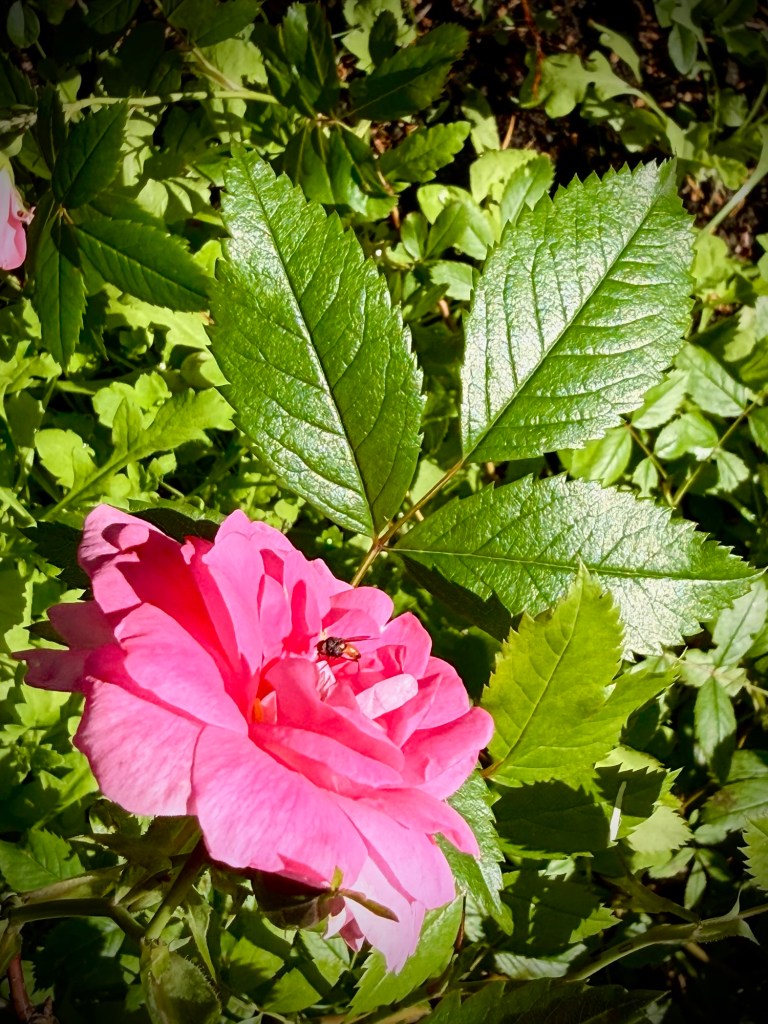
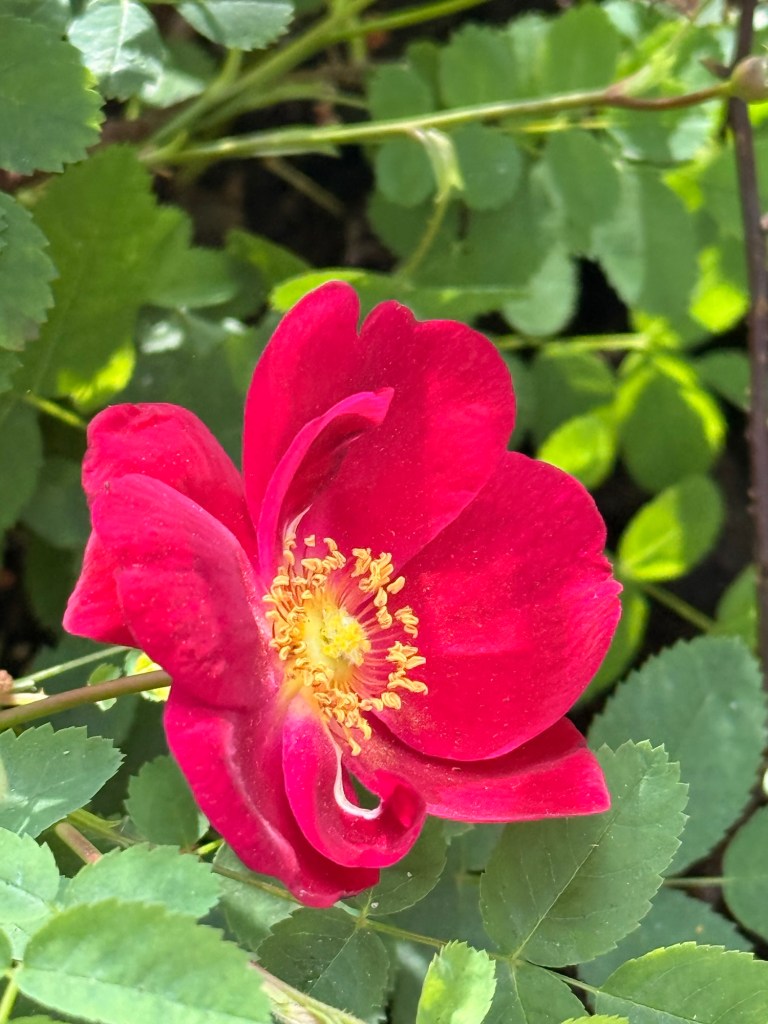
Although this is only its first summer, Rosa ‘ILO’ has already made a positive impression. The flowers are a lovely bright pink, standing out clearly against the surrounding greenery. Their colour catches the eye even from a distance and brings a cheerful touch to the scenery. Whenever I pass by, I find myself taking a moment to admire the blooms.

One feature I have particularly appreciated is how long the flowers seem to last. We have had some very warm weather recently, and many plants struggle to look their best during extended periods of heat. Yet the blooms of Rosa ‘ILO’ have remained attractive remarkably well. Even after several hot days, the flowers continue to provide colour and interest, which is always welcome during the height of summer.

Another reason I chose this rose was its reputation for being relatively easy to grow. Not every plant demands rich soil and constant attention, and that is often an advantage at a summer cottage. Some of the most rewarding plants are those that quietly settle into their surroundings and thrive without much fuss. So far, Rosa ‘ILO’ appears quite content with its new home.

Of course, the first growing season tells only part of the story. A newly planted rose is still establishing its roots and adjusting to its surroundings. It will be interesting to watch how it develops over the coming years. Perhaps it will become larger and fuller, producing even more flowers as it matures. That is one of the pleasures of gardening—or perhaps more accurately, growing plants in a natural setting. The future is never entirely known, and each season reveals something new.

For gardeners in Finland, there is always one question that cannot be answered immediately: how will a new plant cope with winter? Summer allows us to enjoy flowers and growth, but winter is often the real test. As Rosa ‘ILO’ was planted only this spring, its first winter will be an important milestone. I am curious to see how it manages once the snow arrives and temperatures fall.

For now, however, there is no need to think too far ahead. The rose is blooming beautifully, the woodland path is surrounded by summer greenery, and Rosa ‘ILO’ has already brought a little extra colour and enjoyment to the cottage. That feels like a very promising beginning, and I look forward to seeing what the coming seasons will bring.

Standard
flower, gardening

Tove Jansson

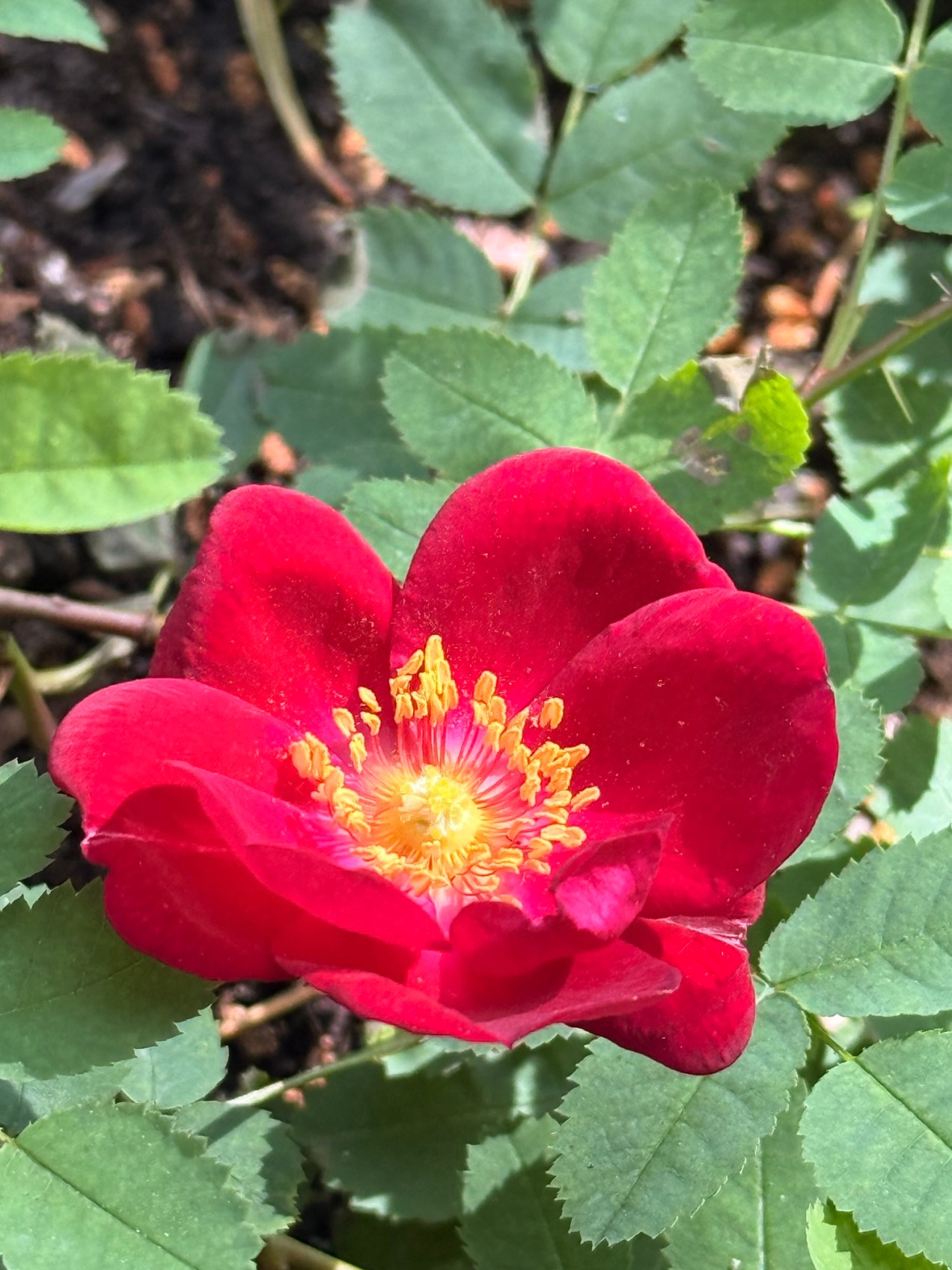
Every now and then a plant arrives in the garden that immediately draws attention. This summer, that honour belongs to Rosa pimpinellifolia ‘Tove Jansson’. I planted it this spring, and although it is still settling into its new home, it has already made a memorable impression.


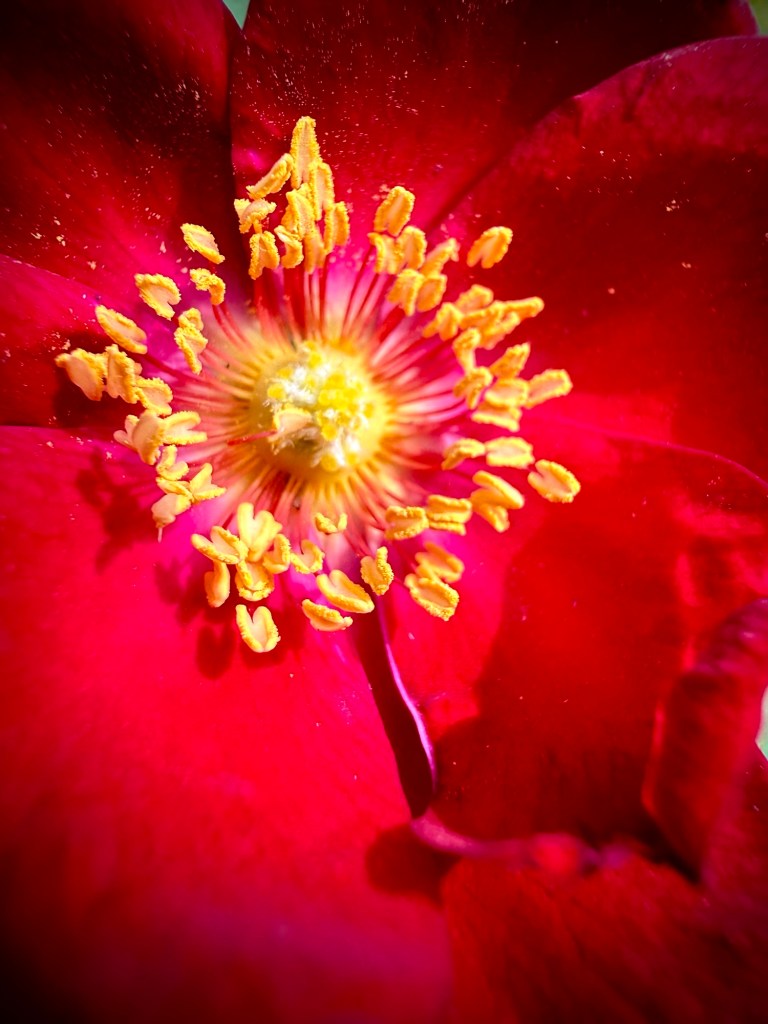
The flowers are unlike anything else among my roses. The colour combination is remarkably bright and cheerful, with vivid yellow petals edged and blended with brilliant shades of red. The contrast is striking, especially on sunny days when the blooms seem to glow in the light. Even from a distance, the flowers catch the eye and bring a welcome burst of colour to the garden.


There is one small disappointment. Each flower lasts only a day before fading. Just as you begin to admire a newly opened bloom, it is already nearing the end of its brief performance. Yet perhaps that fleeting beauty is part of its charm. The flowers are not meant to linger. Instead, they encourage you to appreciate them while they are at their best. Thankfully, the shrub continues to produce new blooms, ensuring that there is always something fresh to enjoy.


Roses are not always easy plants in my garden. The soil is not especially rich, and some varieties would certainly prefer better growing conditions. Fortunately, Rosa pimpinellifolia ‘Tove Jansson’ is known for being less demanding than many modern roses. It seems content enough where it is planted, and so far it has shown healthy growth despite the limitations of the site.


One of the reasons I chose this rose was its reputation for hardiness. In northern gardens, winter survival is always an important consideration. While it is still too early to judge how it will perform after a full winter, I am feeling optimistic. The plant appears vigorous and well adapted, and I am hopeful that it will return next year stronger than ever.


This year’s Midsummer has been bright and beautiful, and the rose has fitted perfectly into the season. Its fiery flowers seem to capture the warmth and light of the longest days of the year. Even though each bloom lasts only a short time, the overall display has been both memorable and uplifting.


As with any new addition to the garden, there is still much to learn. For now, I am simply enjoying the colours and watching how the plant develops. If it continues to thrive and comes through the winter as expected, I suspect Tove Jansson may become one of the most distinctive roses in my collection. It has certainly made an impressive start.

Standard
flower, gardening

Chatelaine

Some flowers attract attention from a distance, while others invite you to come a little closer. Lupinus polyphyllus ‘Chatelaine’, a member of the Russell Lupin group, is one of those flowers. Its tall flower spikes may not always be the largest in the garden, but there is a grace and elegance about them that makes me stop and admire them every summer.


The blooms are a beautiful blend of pink shades, creating a soft display that stands out among the greens of early summer. As the flower spikes sway gently in the breeze, they bring movement and colour to the garden. On warm days they attract bees and other pollinators, and I often find myself watching the activity around them for a few moments longer than I intended.


Over the years I have grown many different flowers, but some become favourites simply because they never disappoint. Chatelaine is one of those plants. It returns faithfully each year and produces its flowers just as the garden is beginning to reach its summer peak. In a northern garden, where the growing season always feels too short, dependable plants become especially valuable.


One of the things I appreciate most about this lupin is how easily it fits into a mixed flower bed. It combines beautifully with many other summer-flowering perennials without competing for attention. Some flowers demand to be the centre of attention, but Chatelaine seems content to complement its neighbours. The result is a natural and balanced display that looks different every year depending on the weather and the surrounding plants.


Every growing season brings its own surprises. One summer may be warm and sunny, another cool and rainy. Yet the garden always finds a way to reward patience. Even familiar plants reveal new details when viewed from season to season. Sometimes it is the abundance of flowers, sometimes the colours appear richer than usual, and sometimes it is simply the pleasure of seeing a favourite perennial emerge once again after a long winter.


At the cottage by the lake, summer days seem to pass at a gentler pace. Morning coffee on the terrace and quiet moments spent looking at the flower beds have become small traditions that I look forward to every year. Chatelaine fits perfectly into those moments. It is not an extravagant flower, but it has a quiet beauty that never fails to catch my eye.


As June turns into July and the garden reaches one of its most colourful periods, I often find myself appreciating plants like Chatelaine the most. They may not be the rarest or most unusual flowers, but they bring reliability, beauty and a sense of continuity to the garden. Year after year they return, bloom and remind me why I enjoy gardening so much.


Lupinus polyphyllus ‘Chatelaine’ is one of those plants whose beauty grows with familiarity. The more summers I spend with it, the more I appreciate its charm. Sometimes the most memorable flowers are not the loudest ones, but those that quietly return and make each summer feel complete.

Standard
flower, gardening

Columbine

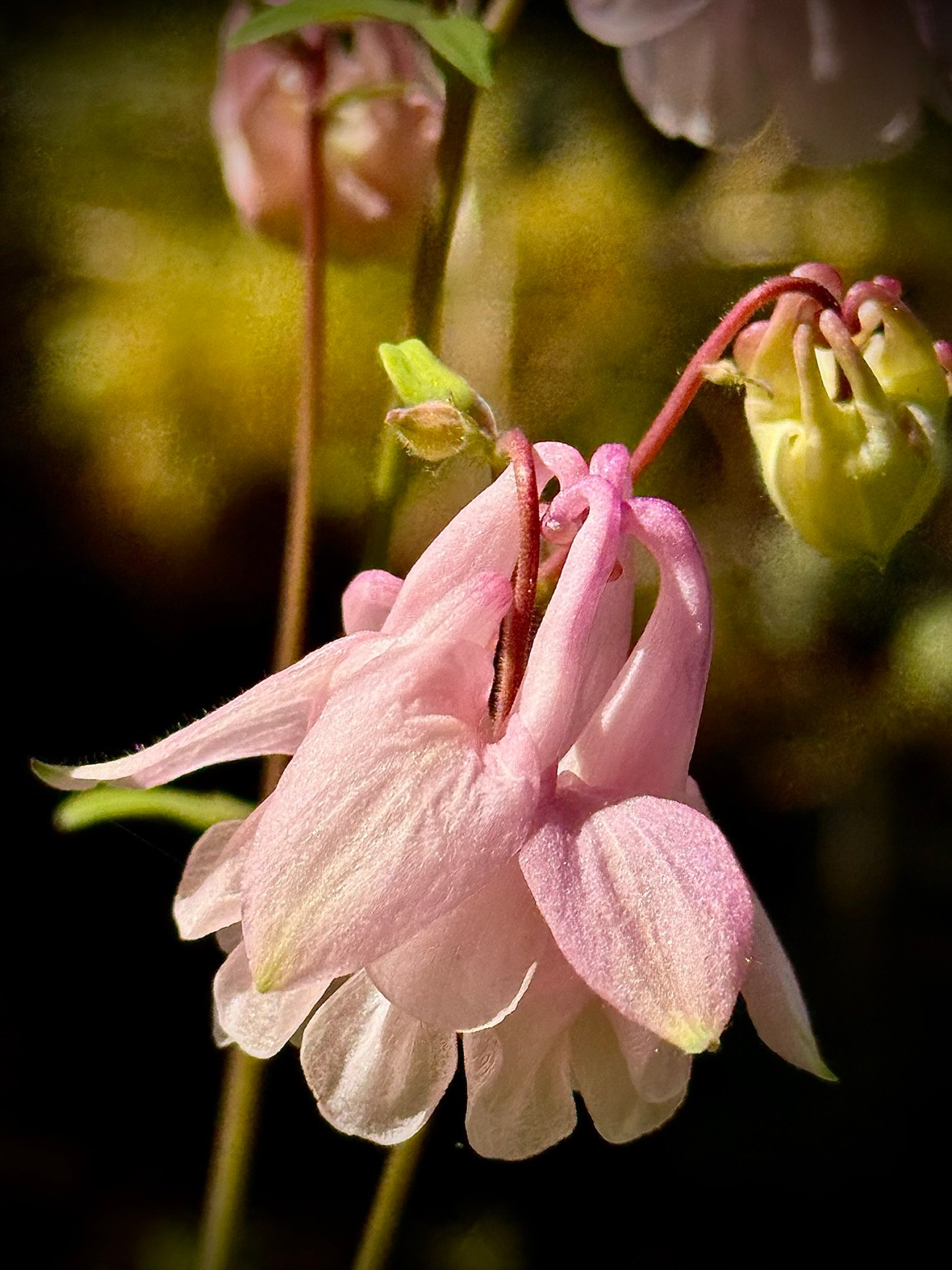
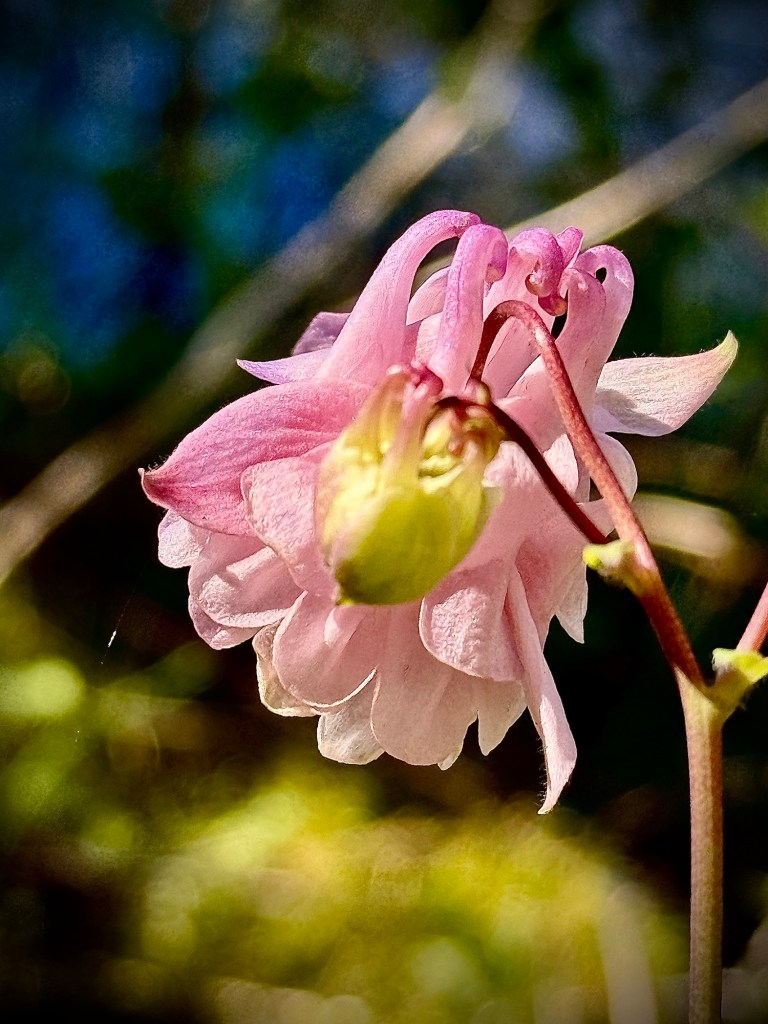
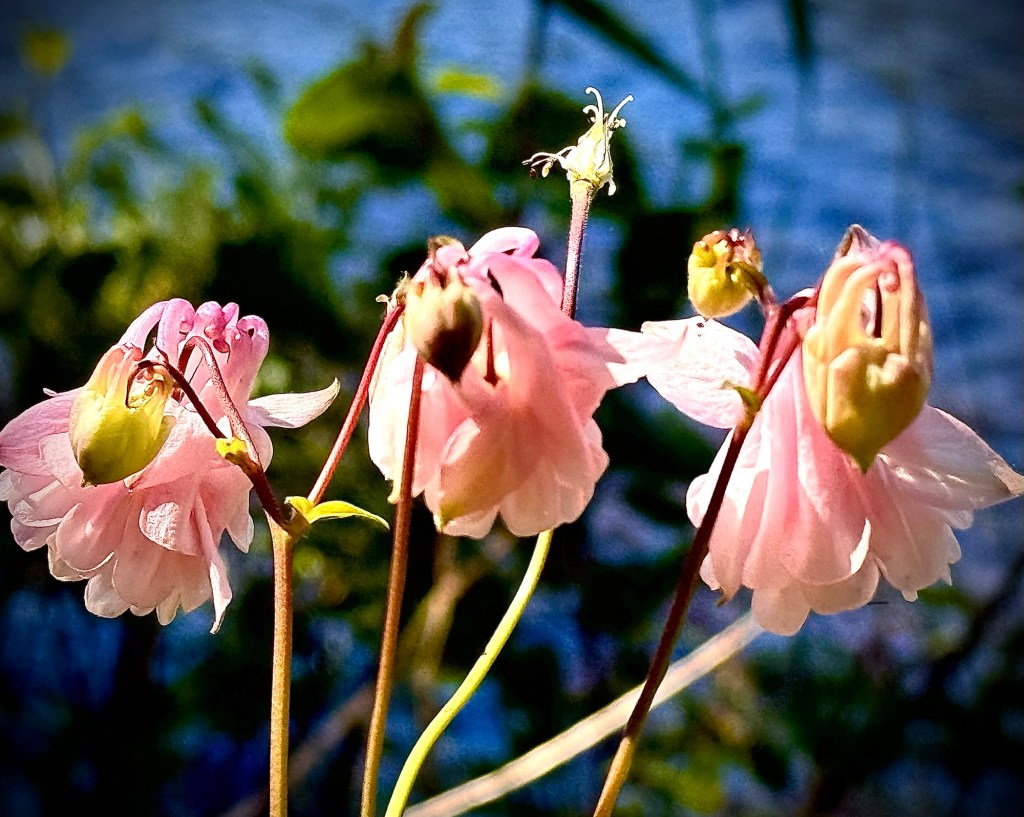
If I had to choose just one flower, it would definitely be columbine.


Aquilegia, as it’s known in Latin, is not the most showy plant, nor the rarest, but for me it carries something no catalogue variety ever could. It has been here for as long as I can remember – and long before that. This is the same old variety my grandma once had growing in her garden, and it has now been part of this place for more than eighty years.


There is something quite special about that thought. Plants come and go, borders change, and new varieties arrive every year, but this one has simply stayed. Or perhaps more accurately, it has quietly moved.


Columbine is not a plant that stays politely where you put it. Individual plants only bloom for a few years in one spot before fading away, but the plant continues by setting seed and starting again somewhere new. One spring you notice it in one corner, and a few years later it appears in another. It disappears, and then returns as if nothing ever happened. It finds its own place.


That is exactly how mine behaves. It never really leaves the garden, but it never fully stays still either.


My earliest gardening memories are tied to this plant. As a child, I used to collect the seeds and scatter them around the garden without much thought. I planted them wherever I felt like it – along the paths, between other plants, sometimes even in places where nothing else seemed to grow. And very often, they did.


There is something generous about columbine. It doesn’t expect perfection. It grows in sun or light shade, finds small gaps, and quietly settles in. It fills that early summer moment in the garden, after the spring bulbs have faded and before the stronger summer flowers take over. The blooms are light and slightly nodding, with their distinctive spurs, delicate but never fragile.


Over time, the plants have changed a little. The colours are not always exactly the same from year to year. That is part of their charm. New seedlings appear with small variations, different shades or slightly altered shapes. But the original feeling of the plant remains – something familiar, something continuous.


The name Aquilegia comes from the Latin word aquila, meaning eagle, referring to the shape of the flower spurs. It’s an interesting detail, but for me the plant has always been something softer. I still think of it as my grandma’s flower.


Every year, when the first blooms open, it feels like a quiet return. Nothing dramatic, nothing demanding attention. Just a simple reminder that something has continued, through seasons and years, without needing much care from me.


These days, I don’t try to control where it grows. I let it decide. It always finds a place that works.
And maybe that is exactly why it has lasted this long. Not because it was carefully planned or protected, but because it has been allowed to move, to change, and to belong in its own way.


I’m just glad it’s still here.

Standard
flower, gardening

Russell Red

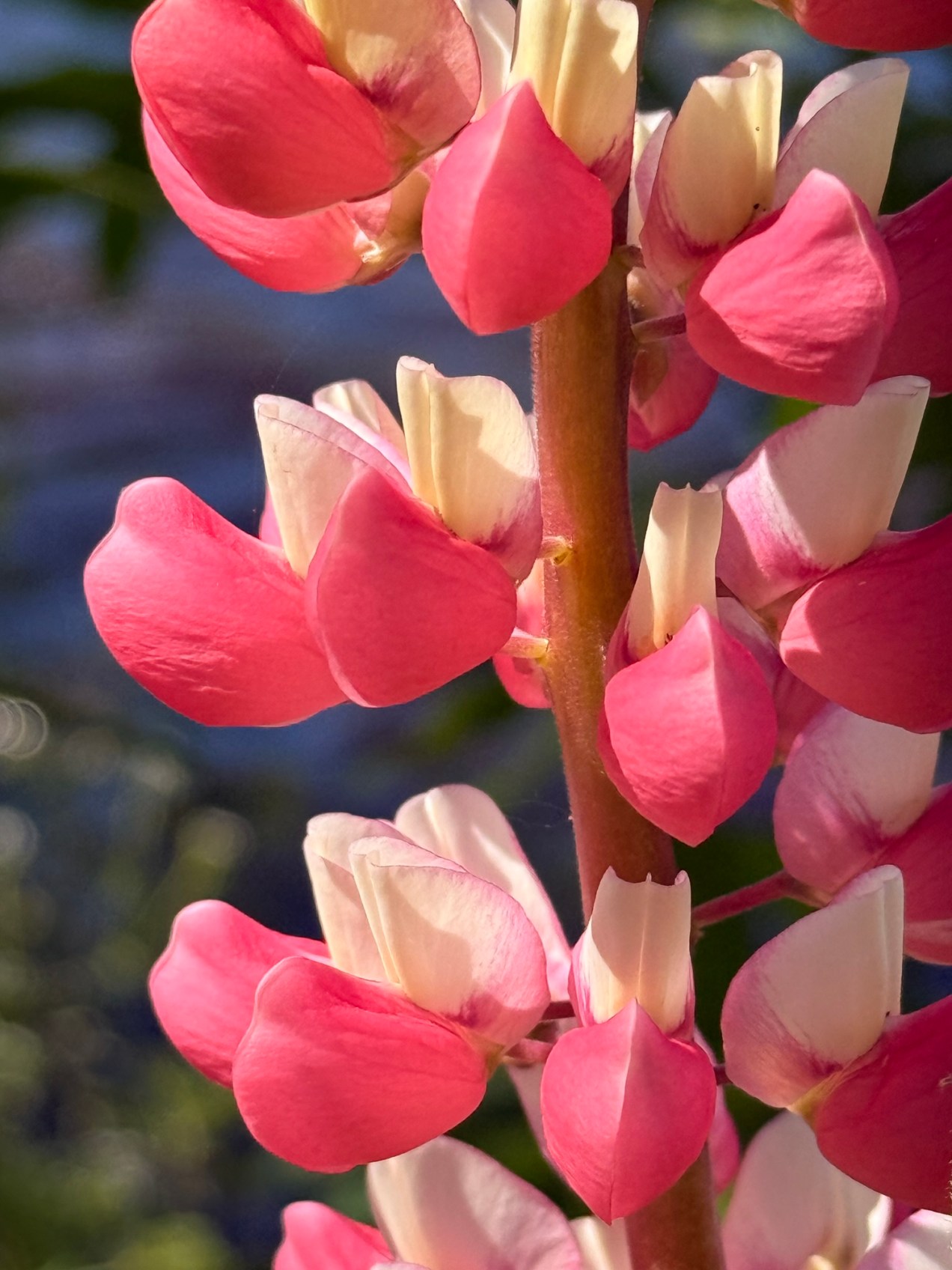
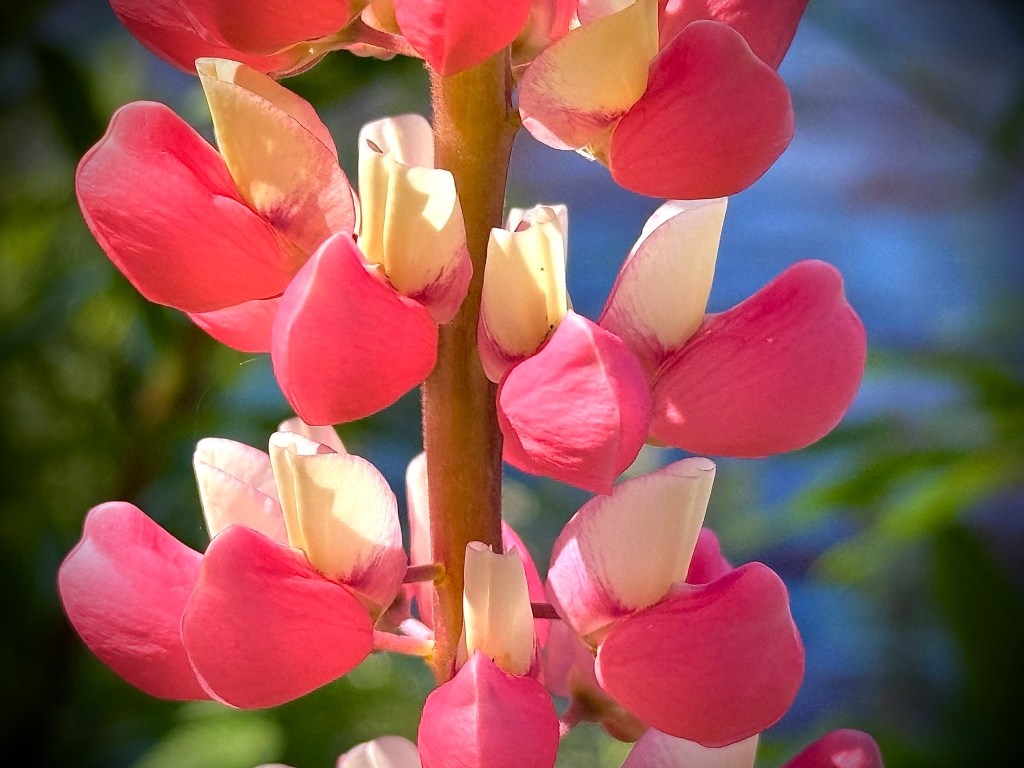
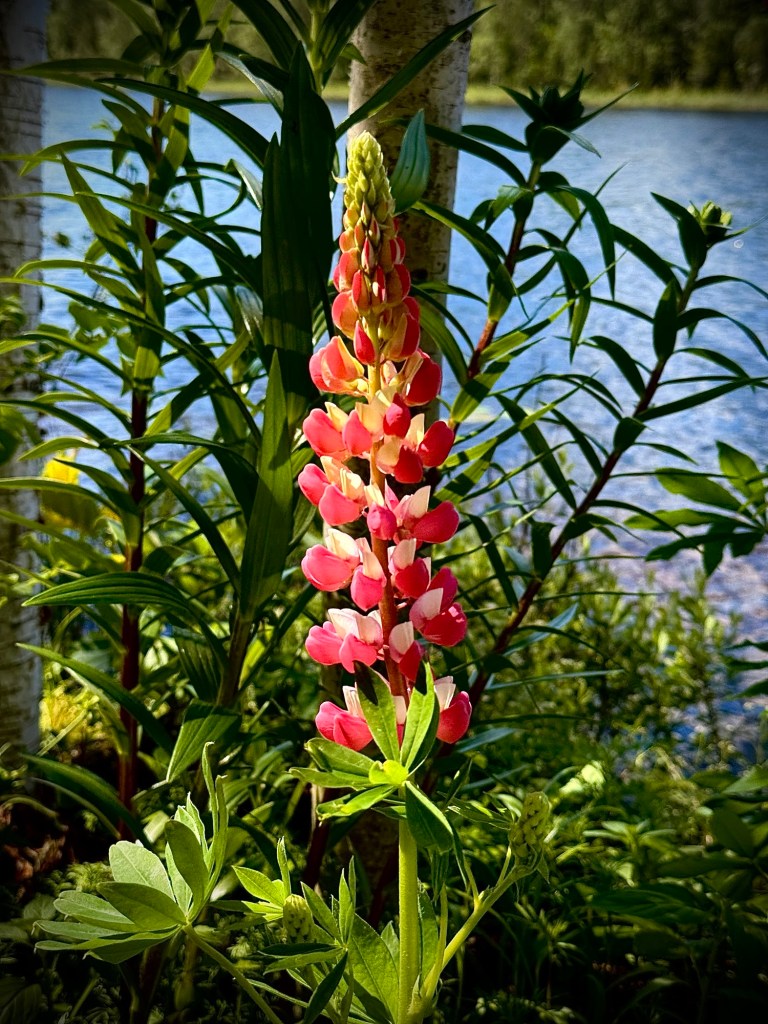
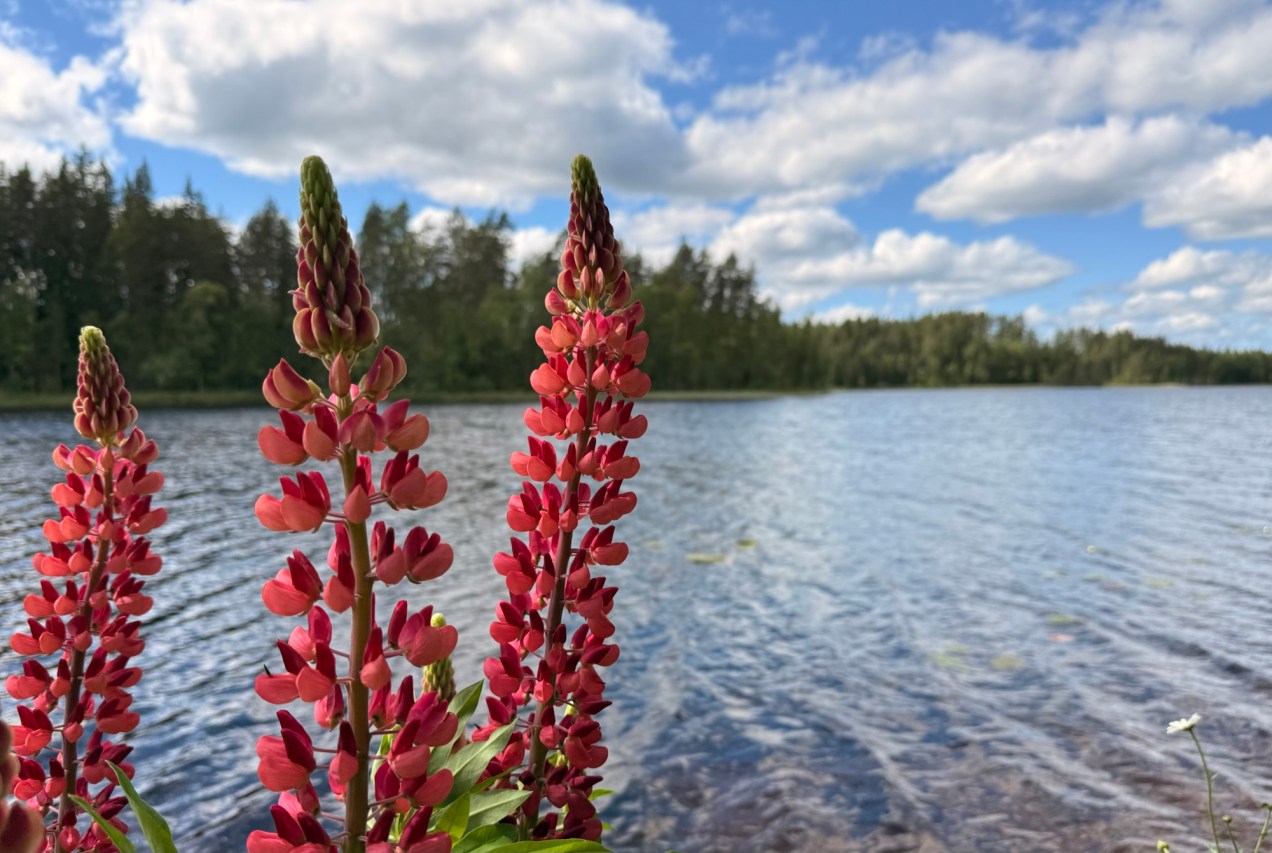
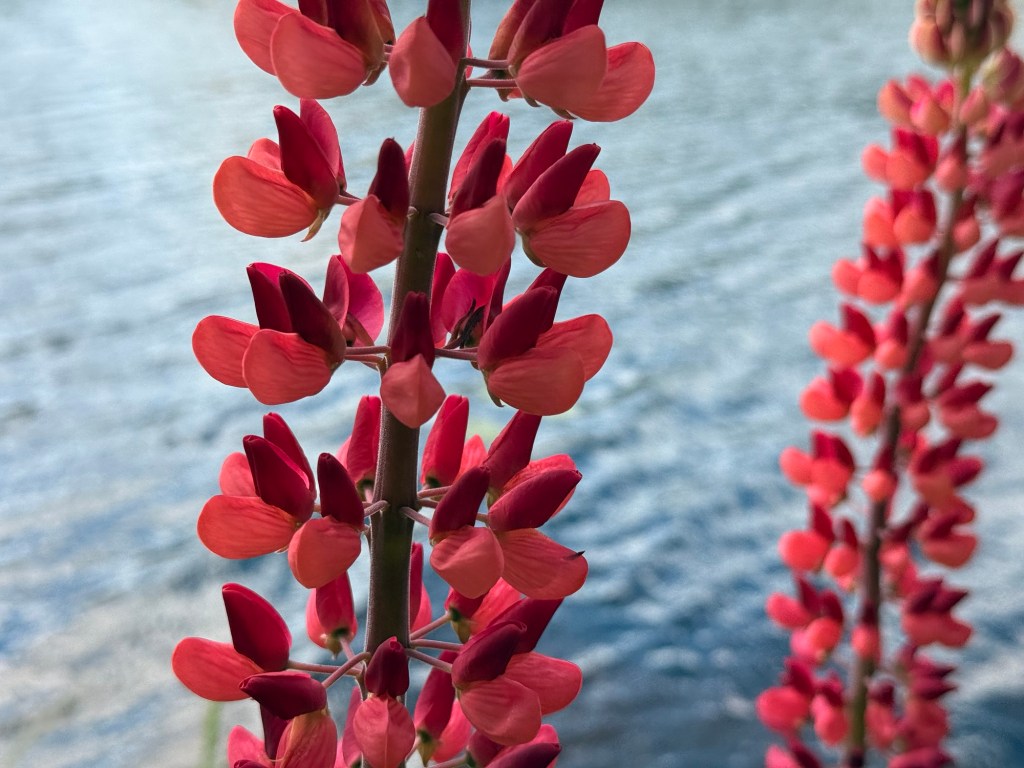
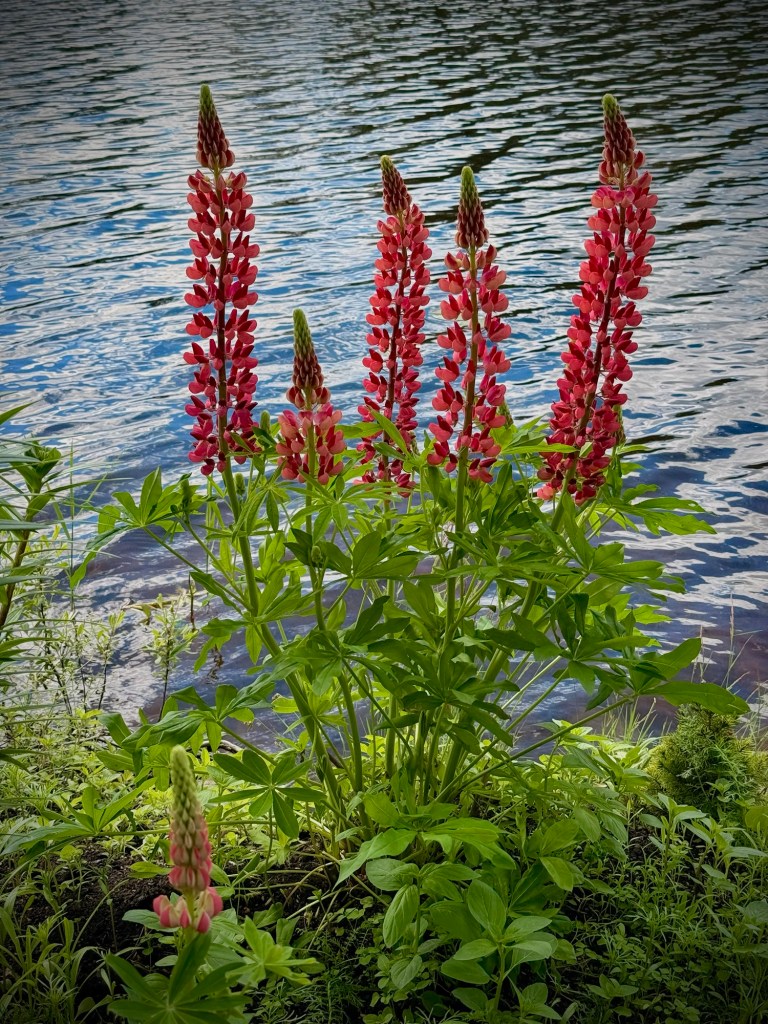
This summer, one of the flowers quietly catching my attention by the lake is the Russell Red lupin. The colour is slightly different from what I expected. It is not just red, but more of a mixture of red and pink, changing a little depending on the light. Sometimes it feels soft, almost faded, and at other times it shows a deeper, warmer tone.


I haven’t really had this colour before, and that is probably why it stands out. Still, it fits naturally into the surroundings. It does not feel too bright or too strong, just somewhere in between.


The Russell varieties are something I have come to appreciate over time. There is something reliable about them. They grow steadily, form their tall spikes, and then bloom in a way that feels generous. Even this red–pink shade, which is new to me, has that same calm presence.


These lupins belong to the Russell group, usually classified as Lupinus × regalis, hybrids originally developed from Lupinus polyphyllus. They are known for their strong vertical growth and wide range of colours, which is probably why every plant feels slightly different.


One thing I like especially is how easy they are. Here in the north, that matters. You cannot expect every plant to survive without some thought. You have to plan where they go. If the place is wrong, they slowly disappear. But when they are happy, they manage well on their own.
This one started blooming early in the season and continues steadily. The flowers open from the bottom upwards, which keeps them going for a long time. Even when I am not here every day, I know they will manage without much attention.


I am still waiting for the others to bloom. With these lupins, there is always a bit of uncertainty. You never fully know what colours will come.
For now, this red and pink mix is enough. It brings a quiet variation to the garden and works beautifully with the open space by the lake. Not perfect, not planned too much—just growing as it happens.

Standard
gardening

Pohjola’s Daughter

A few years ago, I planted my first rhododendrons with great anticipation. At the time, I chose three varieties that looked beautiful in the nursery—lush leaves, promising buds, and colors that felt almost exotic in a northern garden. They are still alive today, which in itself feels like a small victory, but they have never truly thrived. Each spring they wake slowly, cautiously, and their growth has remained modest. I’ve come to suspect that they simply are not quite hardy enough for our conditions.


Still, it is hard to give up on rhododendrons. When they bloom, even modestly, they bring a completely different atmosphere to the garden—something soft, almost woodland-like, with their deep green leaves and layered flowers.


So this year, I decided to try again.


This time, I searched more carefully for varieties known for better hardiness in northern climates. Instead of choosing only by appearance, I focused on durability and resilience. I ended up bringing home two new plants, both slightly different in character but selected with the same hope: that they might adapt better to our winters.


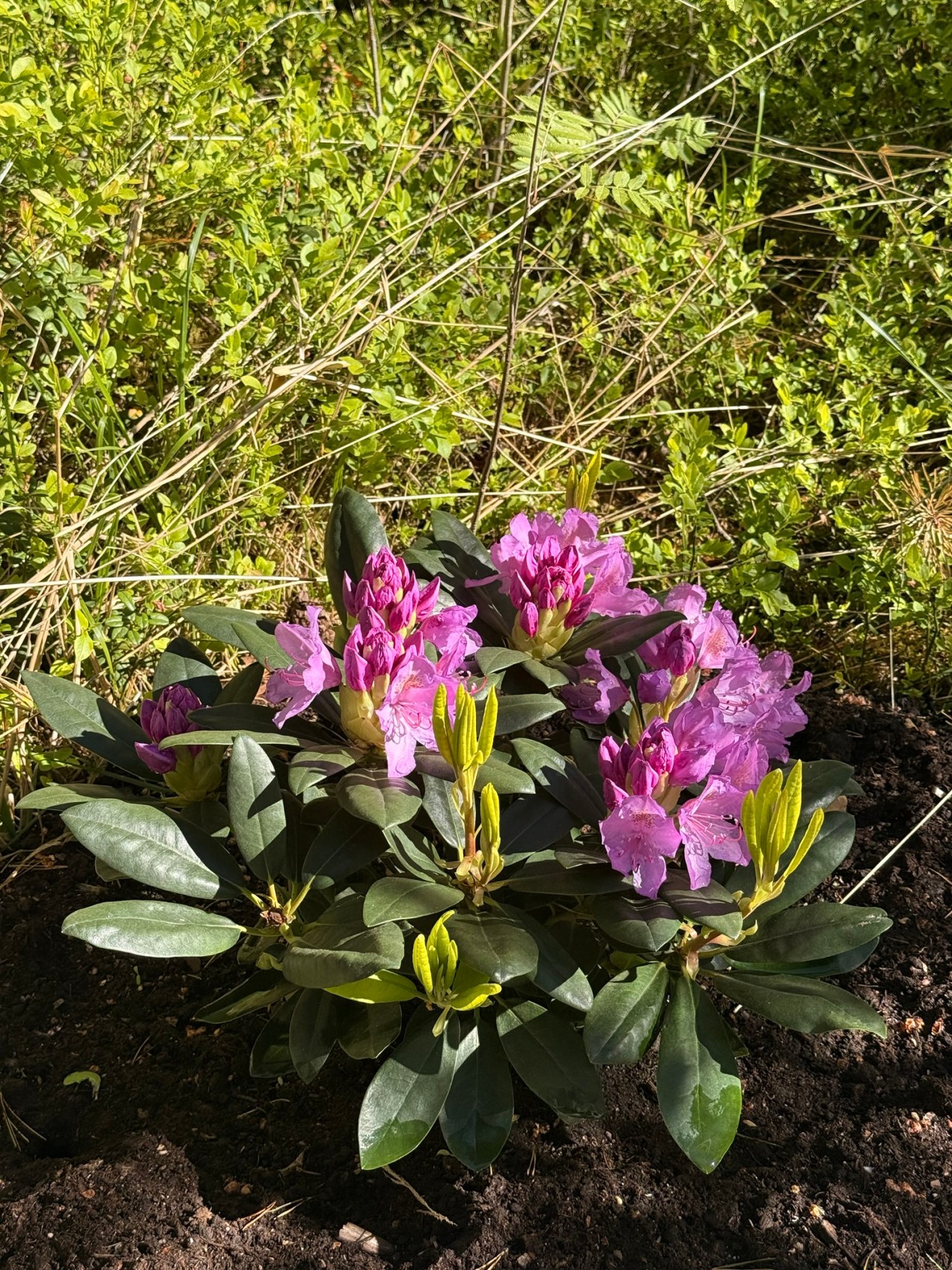
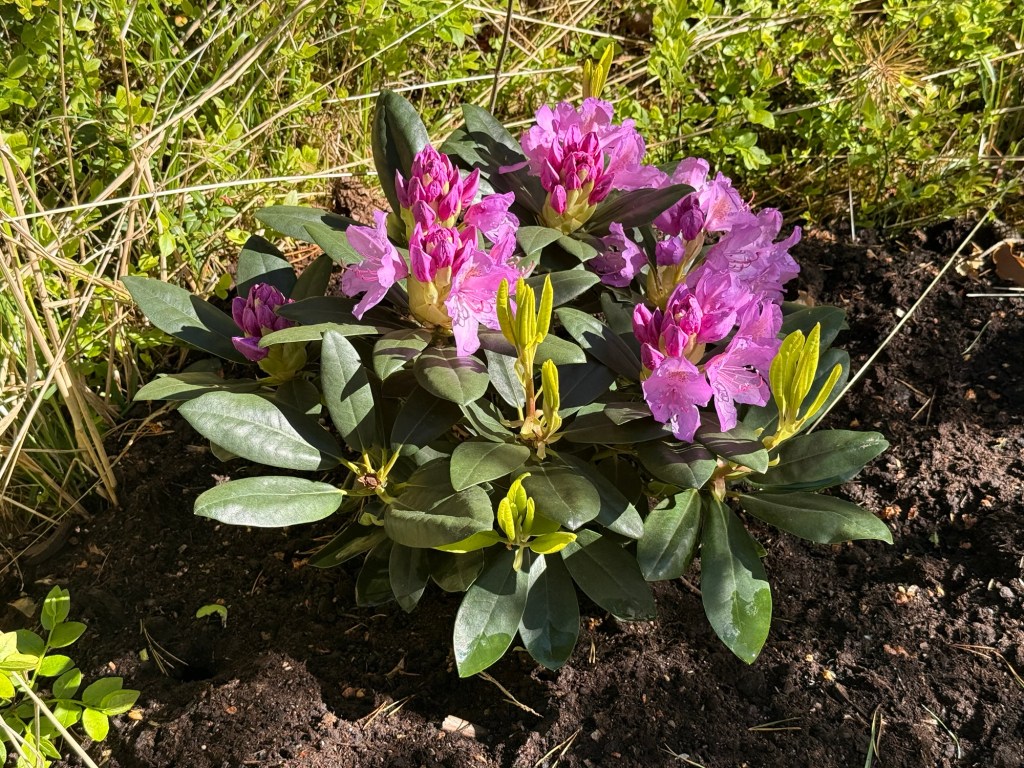
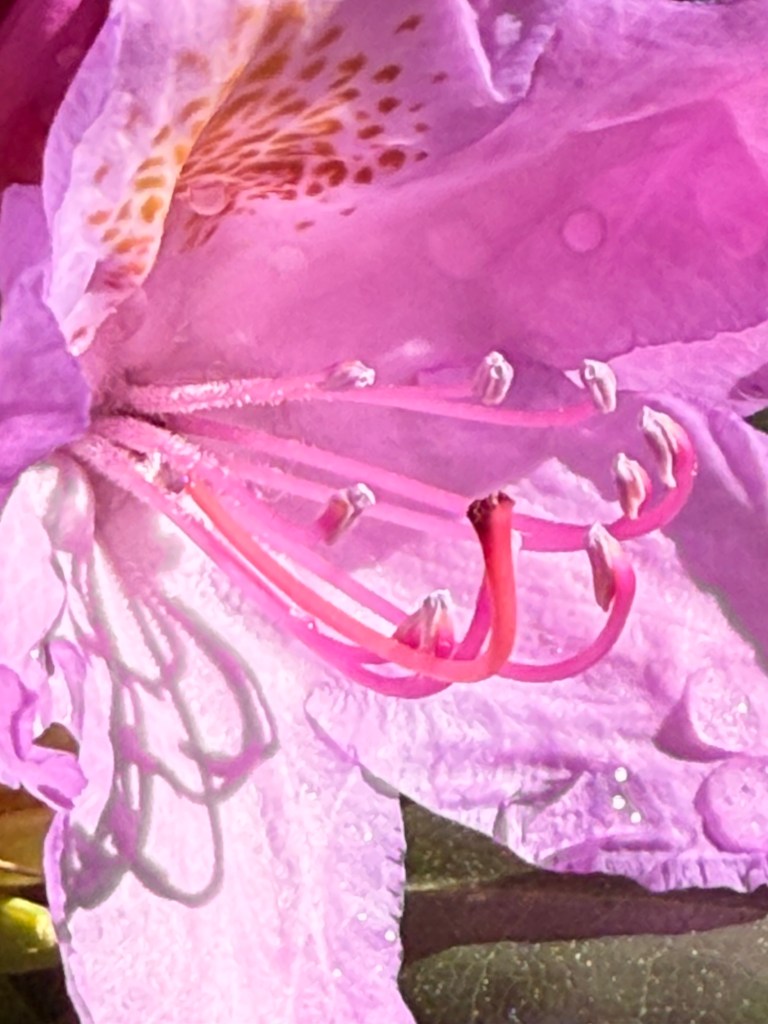
One of them is already rewarding me, (Rhododendron ’Pohjola’s Daughter’).


It is now in bloom, and I find myself returning to look at it several times a day. The flowers are arranged with a quiet symmetry, forming a neat and balanced shape that feels almost deliberate. There is something satisfying about its structure—nothing wild or sprawling, but calm and composed.


Of course, early success in summer does not guarantee anything. Here in the north, the true test always comes later. Snow, wind, and long periods of cold will decide whether this plant can truly belong here.


Still, I allow myself a bit of optimism.


It would be wonderful to have rhododendrons that not only survive, but bloom reliably year after year. A plant that settles in, strengthens over time, and becomes part of the garden rather than a yearly uncertainty.


For now, I will simply enjoy this moment—this season of flowers, symmetry, and promise.


And in a few years, we will know the answer.

Standard
flower, gardening

Tahiti

This spring felt like a small success already, simply because Tahiti made it through the winter again. There’s always a quiet moment of relief when the first leaves come up, especially after a colder season. You never quite take it for granted.

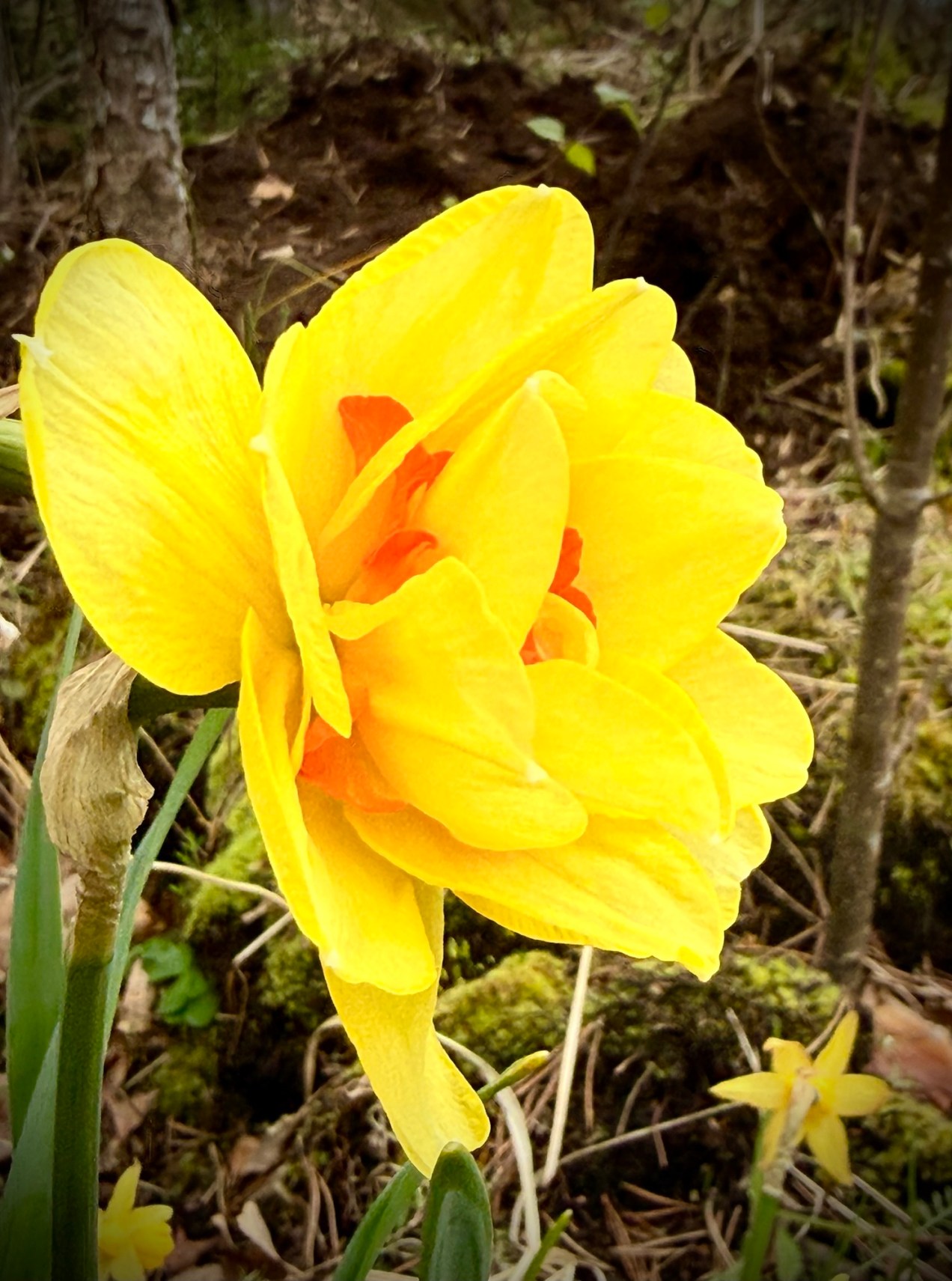
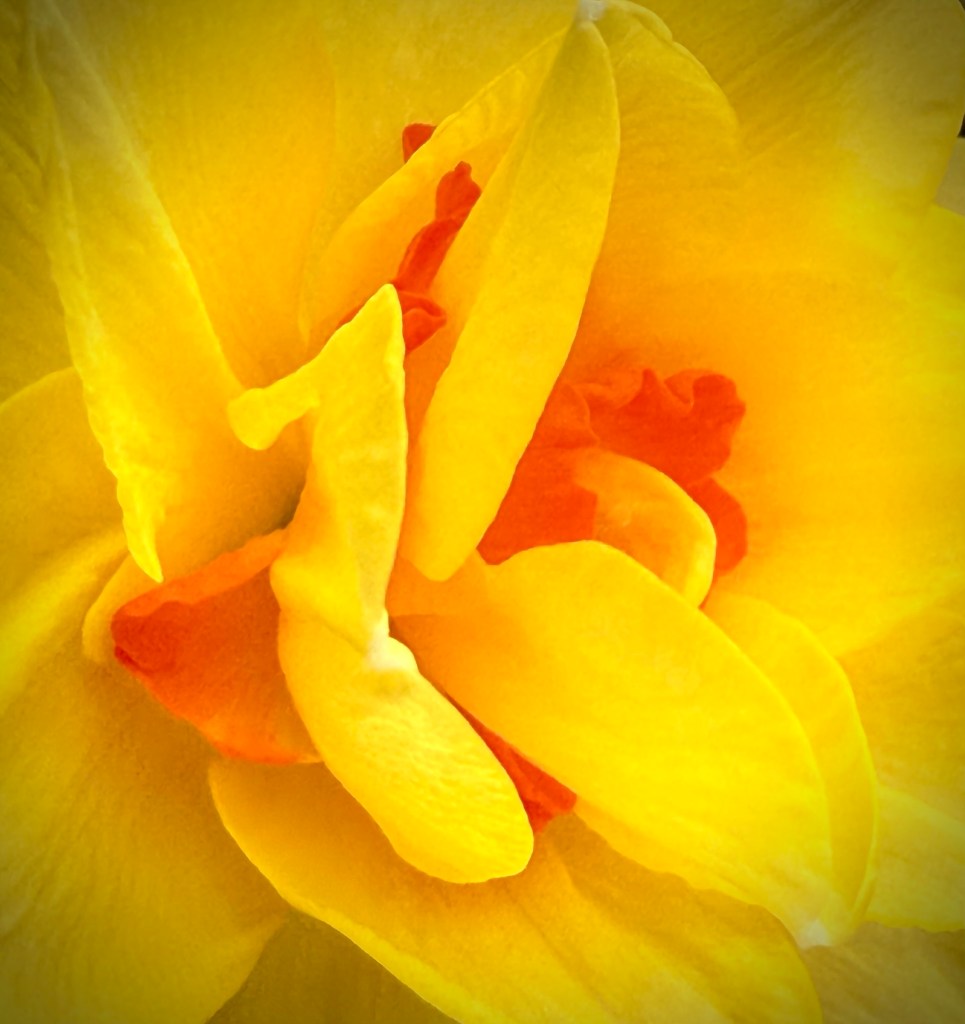
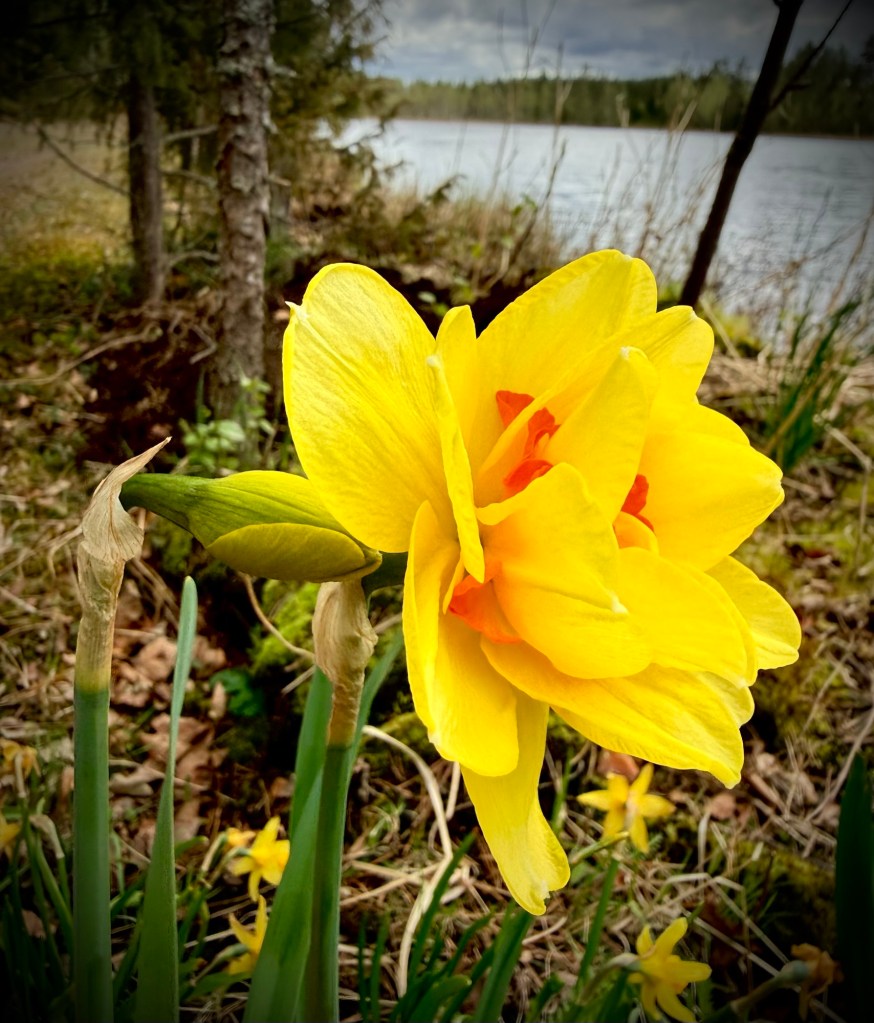
Tahiti (Narcissus ‘Tahiti’) is easily the brightest daffodil I have. The colour is not shy in any way—strong yellow with a deeper, almost glowing orange in the centre. When the flowers open, they don’t look delicate or minimal like some narcissus. Instead, they feel full and slightly wild, with layers that catch the light differently depending on the time of day.

Here, they begin to flower in May and continue through the month. It’s a time when the garden is starting to settle, but still feels fresh and unfinished. Many plants are only just finding their place again after winter, and that’s where Tahiti stands out—it doesn’t wait quietly in the background.

For a few weeks, they bring that strong colour into the garden, and then they’re gone again for the season. By summer, they’ve already done their part. I like knowing that once May passes, the same bulbs will go on to spend the warmer months by the lake, resting and gathering strength for another year.

That rhythm suits them. A short, bright moment in spring, followed by a long, quiet stretch out of sight.

They’re also simple to live with. Like other daffodils, they don’t ask for much once planted. Autumn is the time to put the bulbs into the ground, and after that they take care of the rest. The leaves come and go, and while they may look untidy for a while after flowering, it’s part of the rhythm that keeps them returning each year.

Tahiti is not a quiet presence in the garden, but that’s exactly why I keep it. In May, when everything is beginning to take shape, it brings colour that feels confident and steady—something you can rely on each spring.

Standard
flower, gardening

Tete-a-Tete

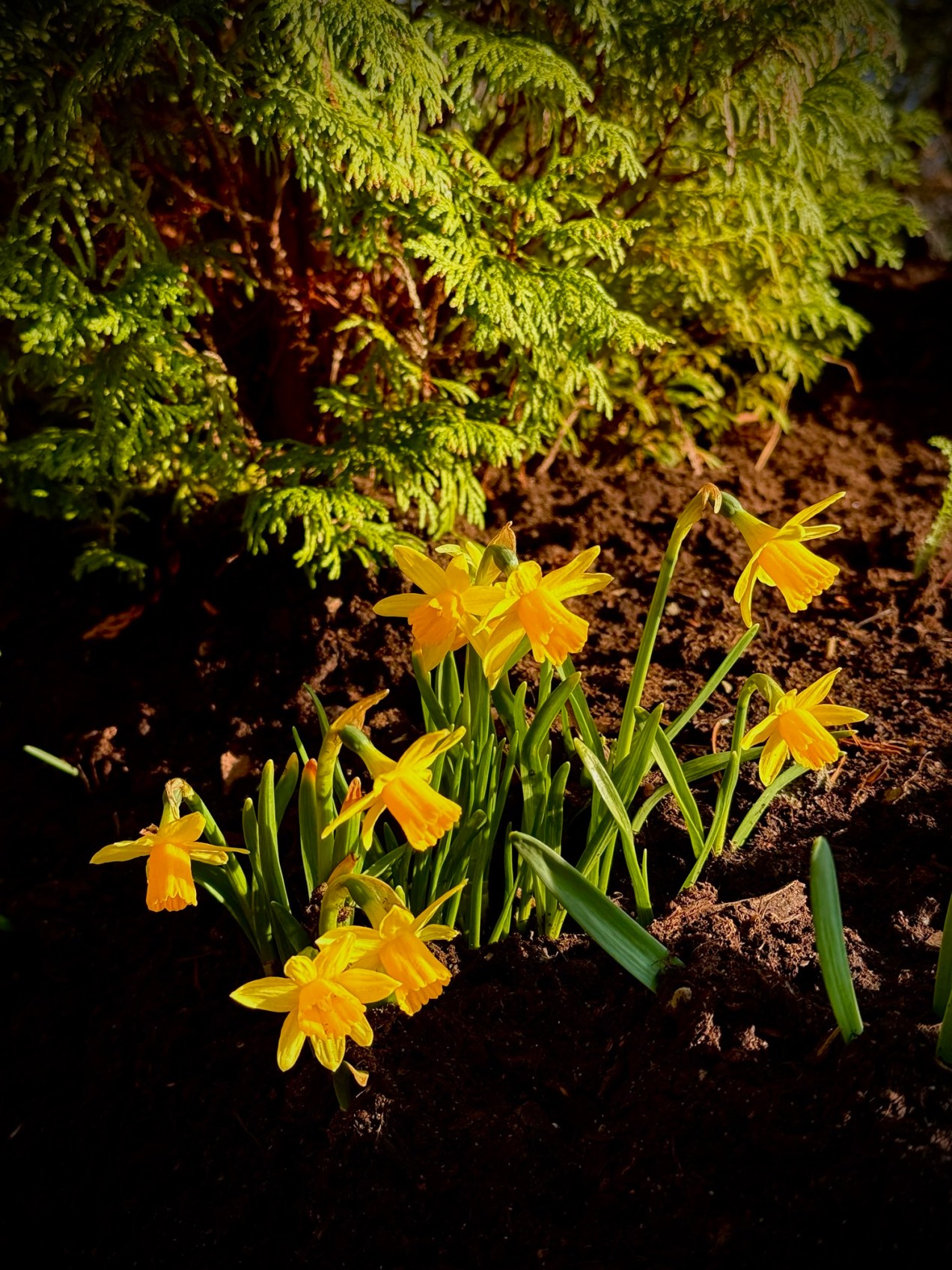
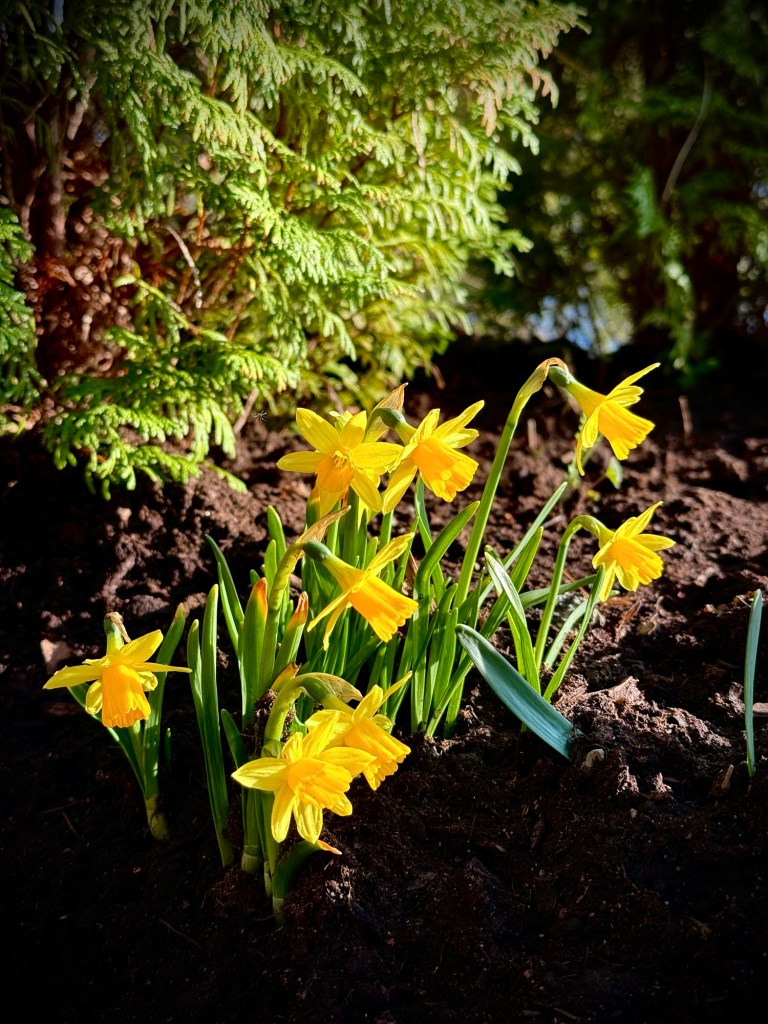
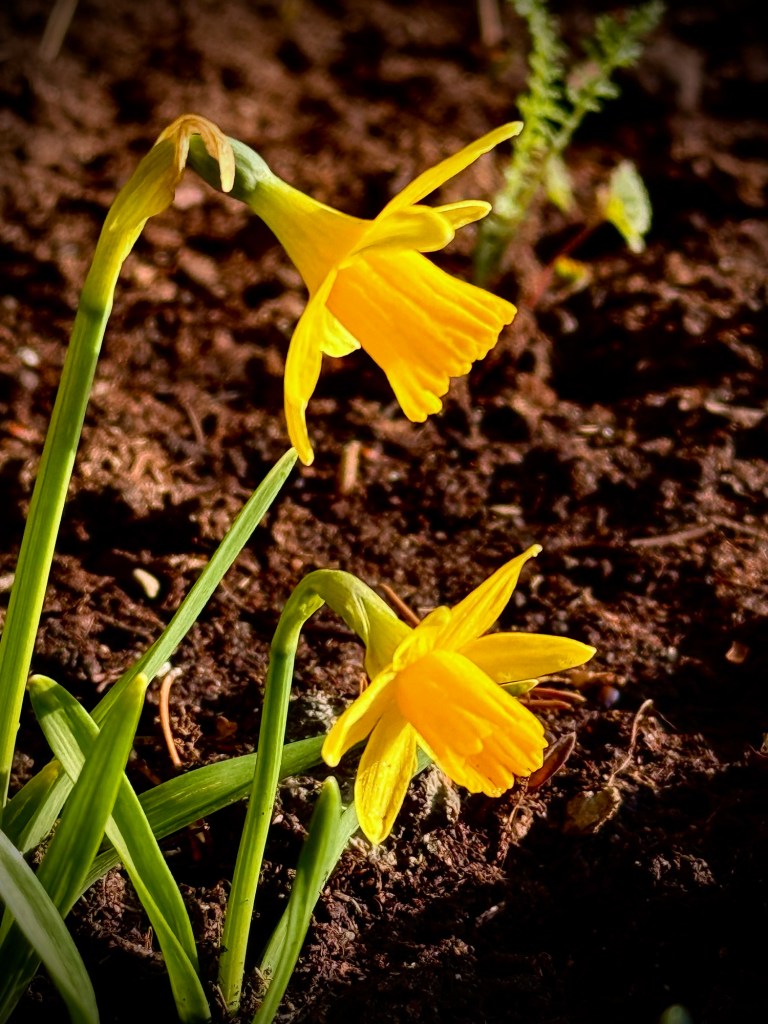
At first glance, Tête-à-Tête daffodils (Narcissus ‘Tête-à-Tête’) can seem almost too delicate for the Finnish spring. They are compact, with short stems and cheerful yellow flowers that lean slightly to one side, as if in quiet conversation. It’s easy to assume they belong in sheltered spots or only in pots brought out for display. But over the years, I’ve come to see that they are tougher than they look.

These miniature daffodils are often among the first to appear once the snow retreats. Sometimes they push through cold soil that still feels more like early April than spring. A light frost doesn’t seem to worry them much. Their leaves may bend, and the flowers may look a little tired for a moment, but when the temperature rises again, they simply continue. There is a kind of quiet resilience in that.

In the garden, I’ve planted them in several places – along the edge of a path, near the base of a shrub, and even in spots where the soil is not particularly improved. They return reliably each year, forming small clumps that slowly grow bigger. They don’t demand attention, but they reward it if given. A bit of well-draining soil and some light in spring is enough.

What I especially appreciate about Tête-à-Tête is how naturally they fit into the early season. At a time when the garden still feels sparse, their bright yellow brings structure and rhythm. They pair well with other early growers, like crocuses or the first emerging perennials, but they are also quite content on their own.

In pots, they are just as dependable. Even when left outside through fluctuating spring weather, they tend to perform without complaint. If anything, they seem shaped by those changing conditions.

There is no showiness here, nothing overly dramatic. Just small flowers, steady growth, and the sense that spring is moving forward—slowly but surely.

And perhaps that is their strength. Tête-à-Tête doesn’t try to stand out by size or boldness. Instead, it simply returns, year after year, doing exactly what it’s meant to do.

Standard
flower, gardening

Garden Grape Hyacinth

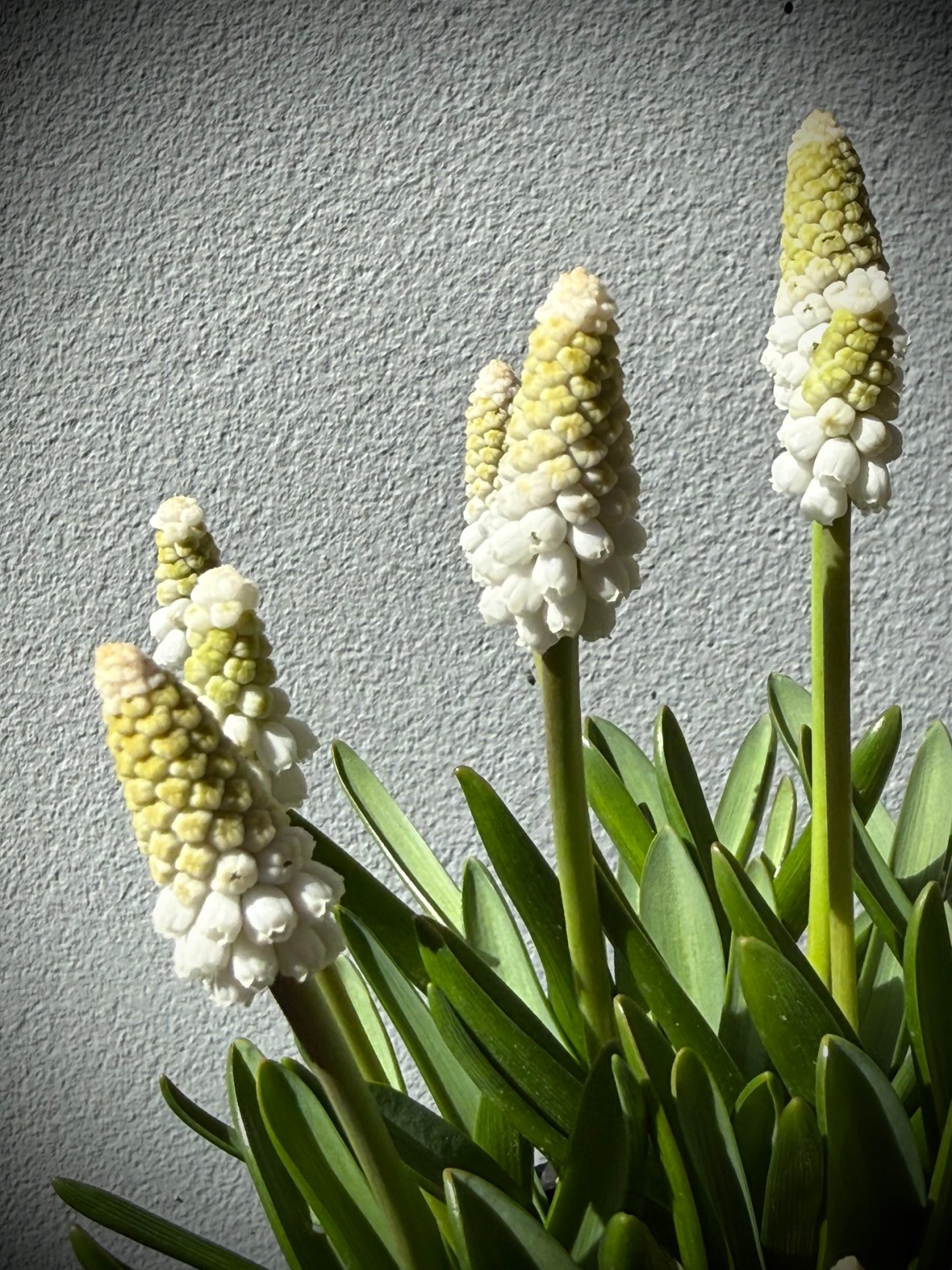
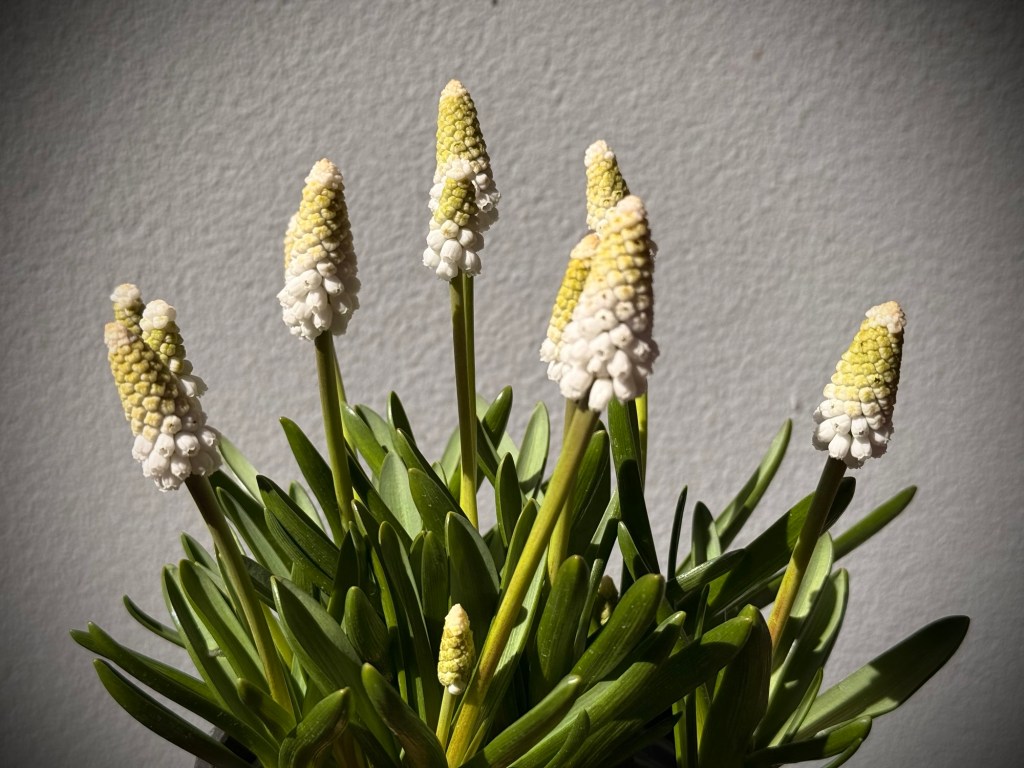
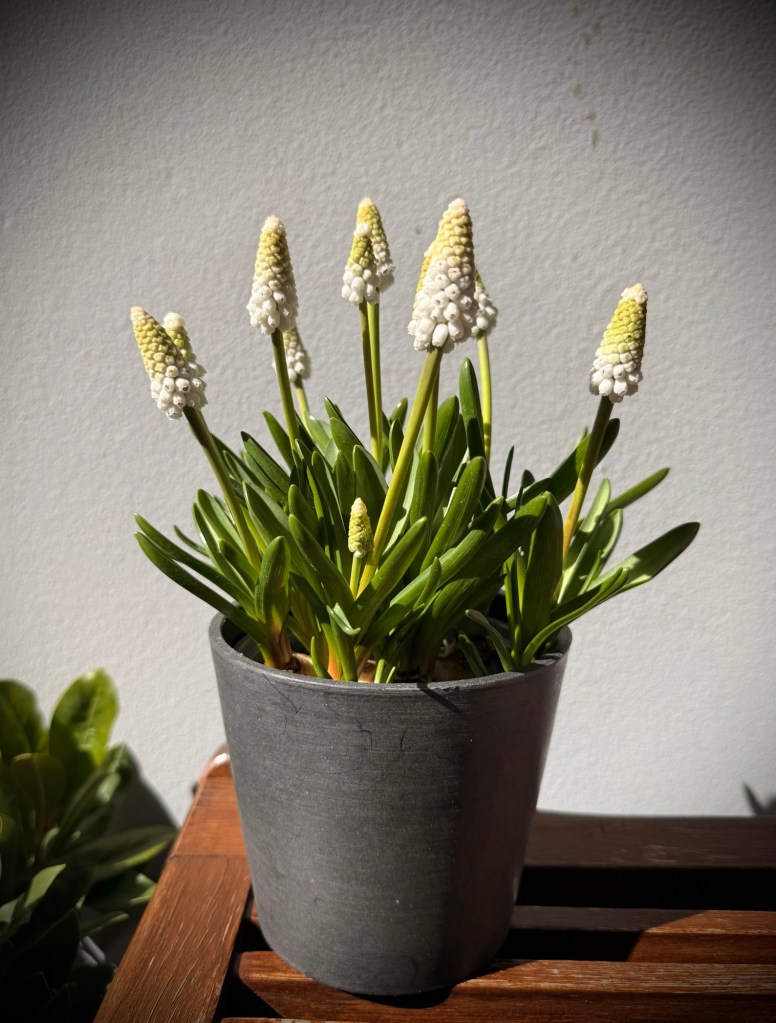
Some plants have a quiet way of returning to our lives, year after year, without ever feeling repetitive. The garden grape hyacinth (Muscari armeniacum) is one of those. Almost every spring, I find myself bringing one home, as if it has become a small but meaningful tradition. Yet another grape hyacinth has joined my spring collection.

What draws me to them is their timing. Grape hyacinths are among the early bloomers, arriving just when the garden is still shaking off winter. There is something comforting about their compact form and upright clusters of tiny bells, standing steady while much of the garden is still waking up. They never rush, yet they’re always right on time.

I have two familiar colours: deep blue and soft white. I haven’t come across any other shades for this variety, and honestly, I’m not sure I’m looking for them. The classic blue feels timeless, almost nostalgic, while the white brings a gentle lightness that fits beautifully into early spring. Together, they complement each other quietly, without competing for attention.

For now, these grape hyacinths stay close, settled on the balcony where I can enjoy them every day and watch them change as the season moves forward. After their blooming has passed, they will make their usual journey to the summer cottage. There, they’ll be planted into the garden soil, where they can settle in, return the following spring, and slowly become part of the landscape. I like the idea that each plant carries a small story with it — where it was first enjoyed, before finding its longer home.

Perhaps that’s why I keep buying one each year. Not because I need another, but because each grape hyacinth marks a moment in time. A spring that arrived early or late, a season that felt gentle or rushed. They are simple plants, but a true delight — reliable, modest, and rewarding in their own quiet way.

Standard