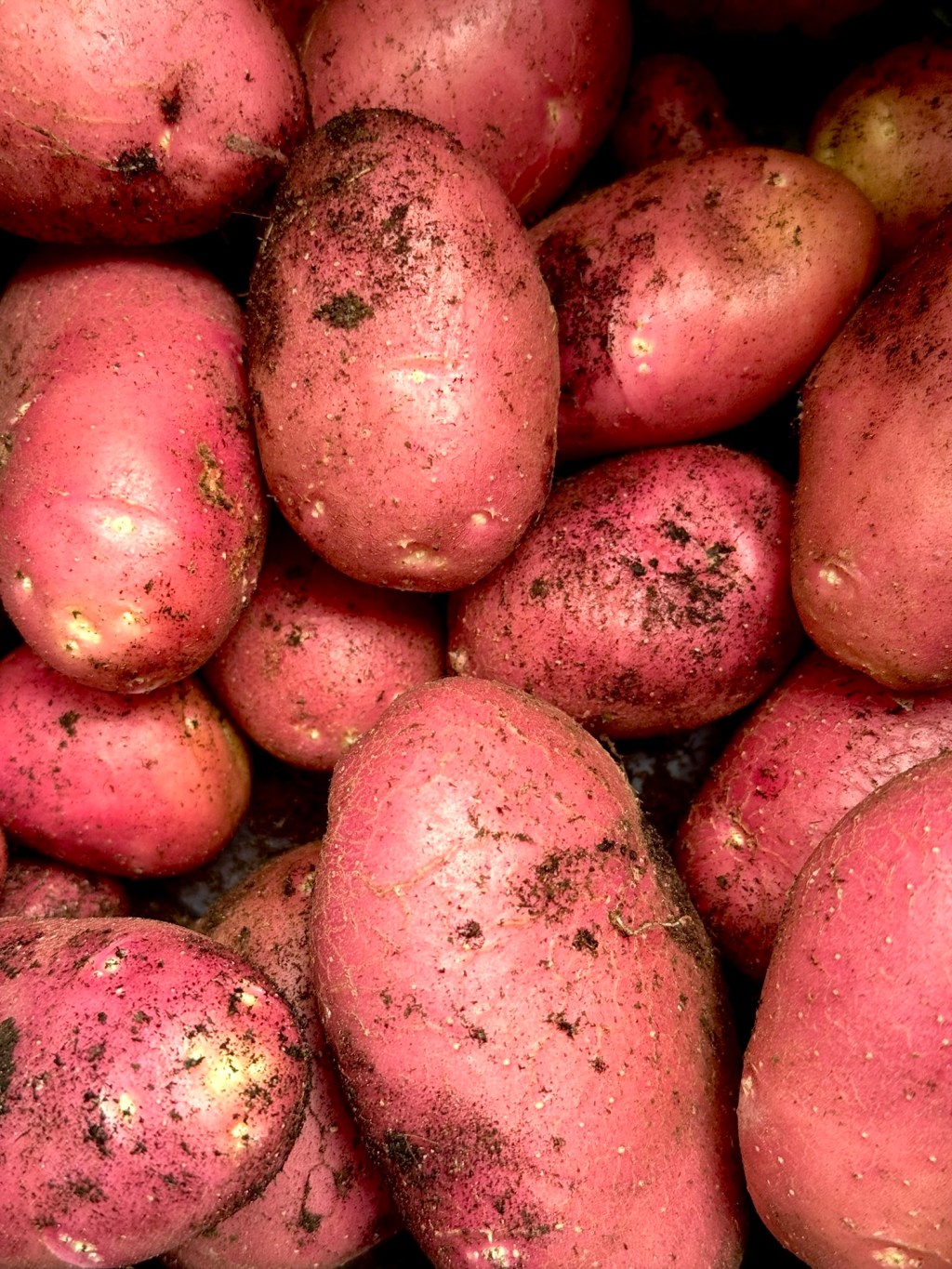
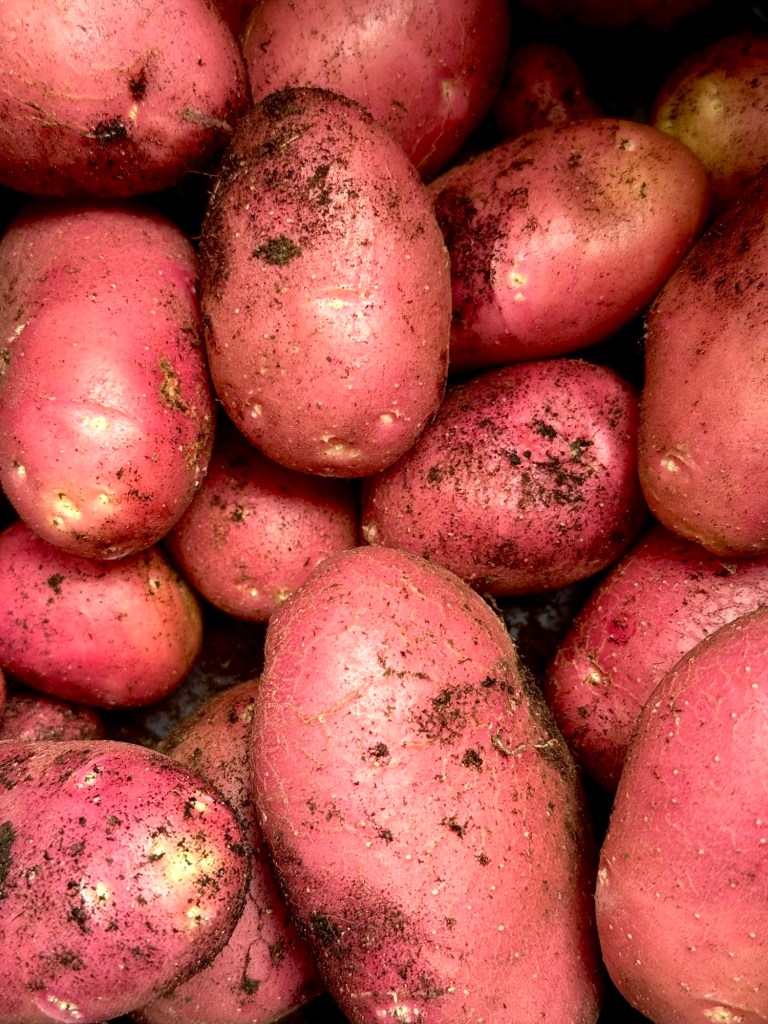
Finland is a potato country. It may sound like a simple statement, but potatoes have been such an important part of Finnish food culture for generations that it is difficult to imagine our gardens, kitchens and summer tables without them. We grow many different varieties, each with its own character and purpose, and in my garden one of the reliable favourites is Rosamunda.
Rosamunda is not a new or fashionable variety, and perhaps that is part of its charm. It is simply a good, dependable potato. Year after year it has proven itself in the garden, usually producing a generous crop, and most importantly, the flavour is excellent. When a variety performs well and tastes good, there is very little reason to replace it.
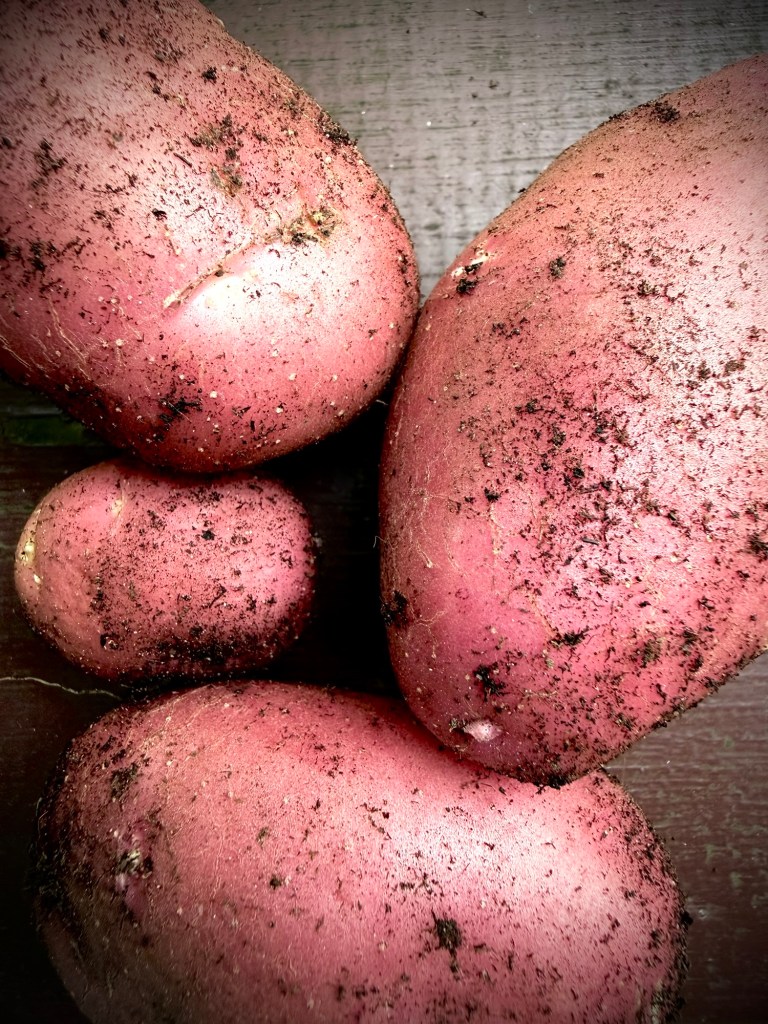
Rosamunda is a medium-late potato variety of Swedish origin. It has distinctive red skin and light yellow flesh, and the tubers can grow quite large. It is classified as a floury potato and is particularly well known in Finland as an excellent baking potato. However, that description does not really do it justice. Rosamunda is also very good boiled, mashed or used in many traditional potato dishes. Its floury texture and rich potato flavour make it wonderfully versatile.
For me, however, the best way to enjoy Rosamunda is probably also the simplest.
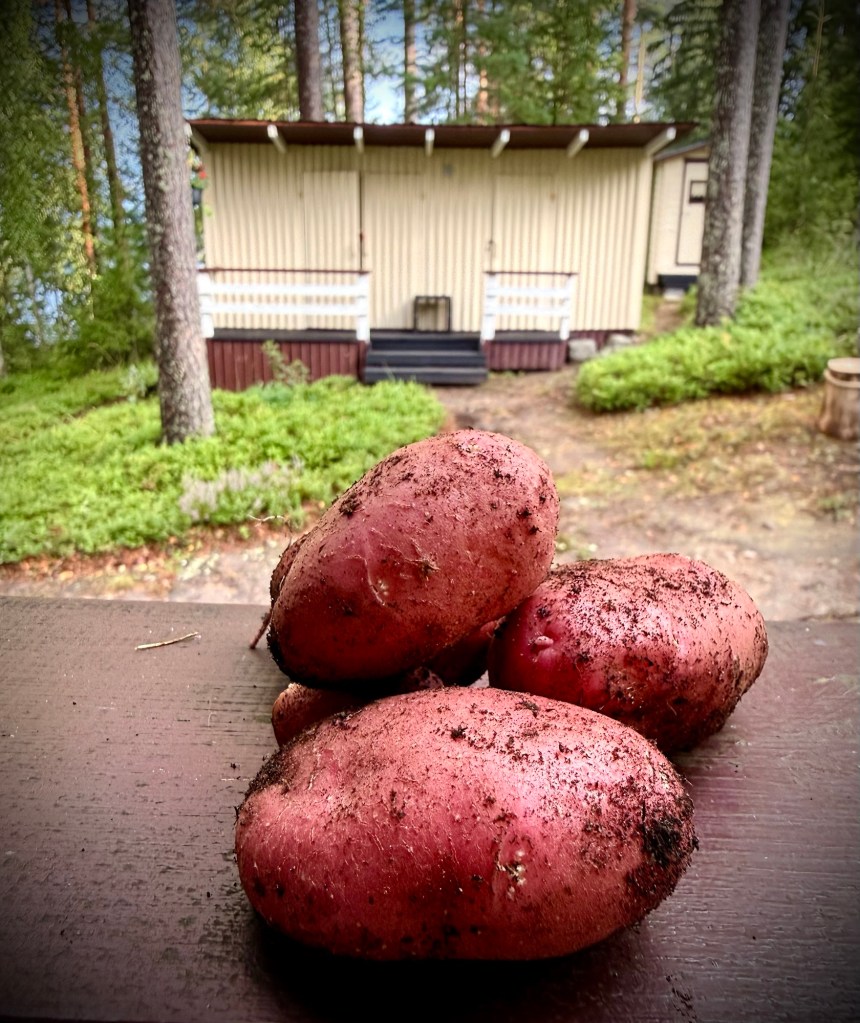
At the summer cottage, there are usually only a few potato plants growing in the vegetable garden. I do not try to produce enough potatoes to last through the winter, and there is certainly no large potato field. Growing them is more about the pleasure of having my own potatoes during the summer.
And few things taste better than a potato that has just been lifted from the soil.
There is something almost impossible to reproduce with potatoes bought from a supermarket. You carefully dig around the plant, discover the tubers hidden underneath and carry them directly to the kitchen. A short while later they are boiling in a pot. Add a little salt and perhaps some butter, and very little else is needed. A freshly harvested potato can taste almost unbelievably good.
Perhaps part of that pleasure comes from the long relationship between Finland and the potato.
The potato itself, Solanum tuberosum, originates from South America, particularly the Andes, where potatoes had been cultivated for thousands of years before Europeans arrived. Potatoes reached Europe during the second half of the 16th century, but their journey northwards was gradual.
In Finland, potatoes were probably first cultivated in the 1730s. One of the earliest known places was Fagervik in Inkoo, where Saxon workers are believed to have grown them. The potato received another important push after Finnish soldiers returned from the Pomeranian War of 1757–1762. They had encountered potatoes during the war and helped spread knowledge of the crop when they returned home.
Even then, Finns did not immediately fall in love with potatoes. Like many unfamiliar plants, they were initially regarded with some suspicion. During the late 18th and early 19th centuries, various organisations and individuals actively encouraged people to grow them. Seed potatoes were distributed and instructions were given on how to cultivate and use this strange new crop.
Eventually, the potato won.
By the 19th century it was becoming an increasingly important food in Finland, and later it developed into one of the foundations of the Finnish diet. The reasons are easy to understand. Potatoes grow remarkably well in our northern climate, produce a substantial amount of food from a relatively small area and can be stored through the long winter.
Over the generations, Finland also developed a strong potato culture of its own. We learned to appreciate different varieties for different purposes: firm potatoes for some dishes, floury ones for others, early potatoes for the beginning of summer and varieties suitable for winter storage.
Rosamunda belongs very comfortably in this tradition.
In the garden it has been one of my dependable varieties. The plants grow strongly and the harvest is usually generous. The large red-skinned tubers are also easy to recognise when digging them from the soil. As Rosamunda tends to produce fairly large potatoes, it is worth giving the plants enough space and planting the seed potatoes reasonably deep.
There are newer varieties, earlier varieties and perhaps varieties that promise even bigger harvests. But gardening is not always about finding something new.
Sometimes it is about discovering something that works and continuing to grow it.
Rosamunda has earned its place in my garden for exactly that reason. It grows well, produces reliably and tastes the way I want a potato to taste. After all, the final test takes place not in the garden but at the table.
And on a Finnish summer day at the cottage, when a few Rosamunda potatoes have been lifted straight from the warm soil and carried into the kitchen, it is difficult to imagine anything tasting much better.
 Gardening in the North