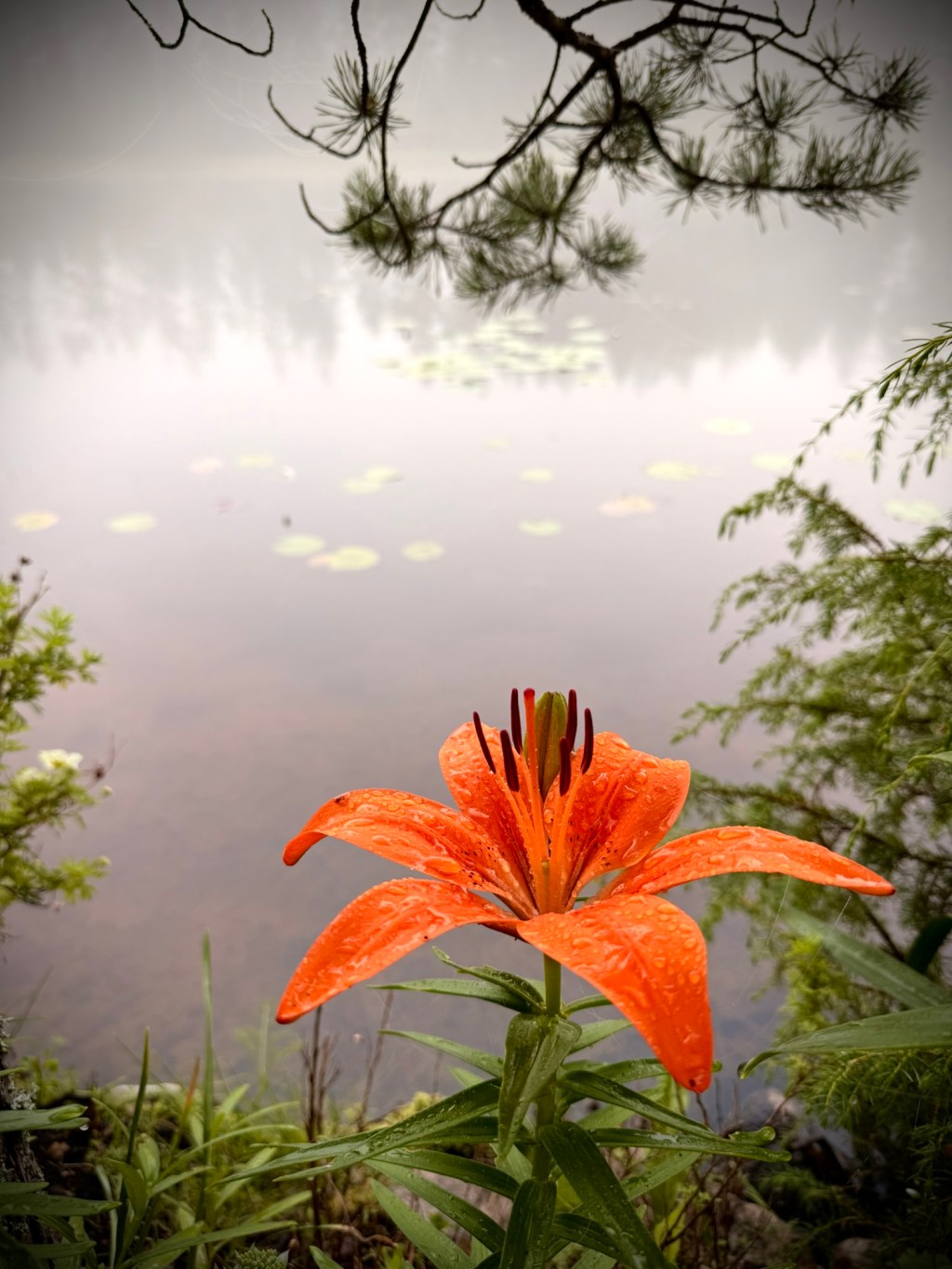

Every summer, one group of flowers steals the show along the shoreline of my little pond in the north. They stand proudly above the surrounding greenery, opening their large blooms toward the sky as if they know exactly how beautiful they are. Those flowers are lilies, or Lilium, and they have become one of my favourite companions at the summer cottage.
My lilies have an unusual story. I rarely buy expensive bulbs from garden centres. Instead, I often purchase flowering potted lilies from supermarkets or local shops while they are in bloom. Most people enjoy them indoors for a week or two before throwing them away, but I see them as the beginning of something much longer. Once they have finished flowering, I plant the bulbs outside at the cottage. It feels rewarding to give them a second life instead of treating them as disposable decorations.
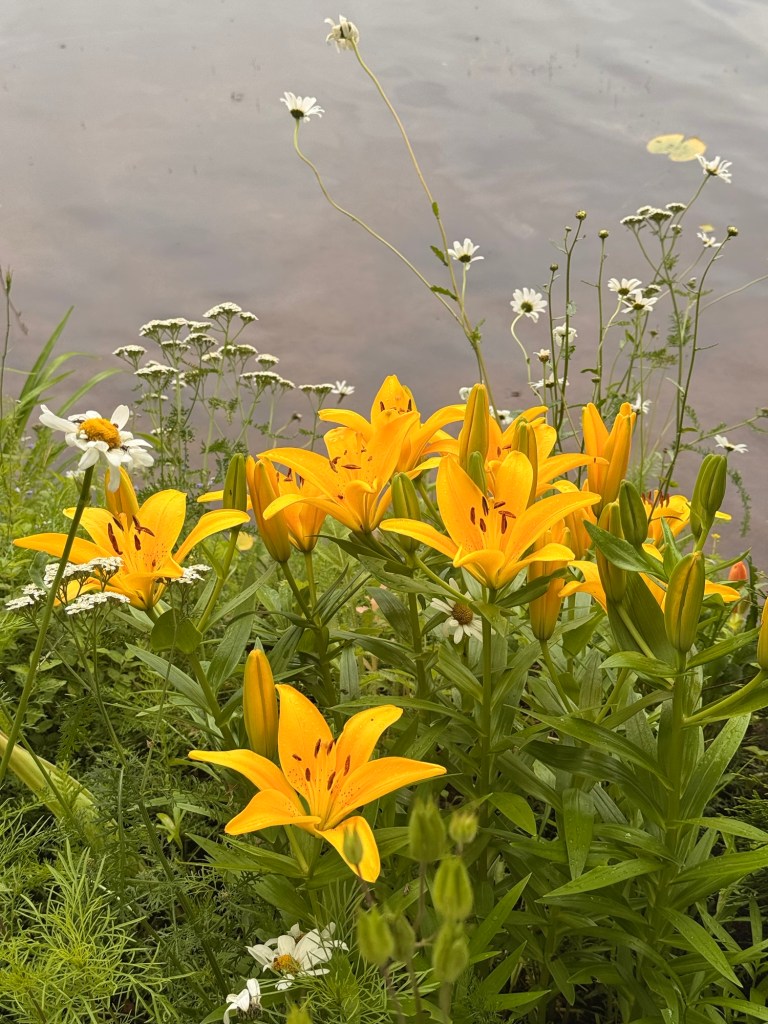
Many of the lilies growing by the lake today started exactly this way. Some have been with me for many years now. Every summer they return from beneath the soil, pushing up fresh green shoots before producing their spectacular flowers once again. Watching them reappear every spring never gets old. It reminds me that nature has an incredible ability to renew itself year after year.
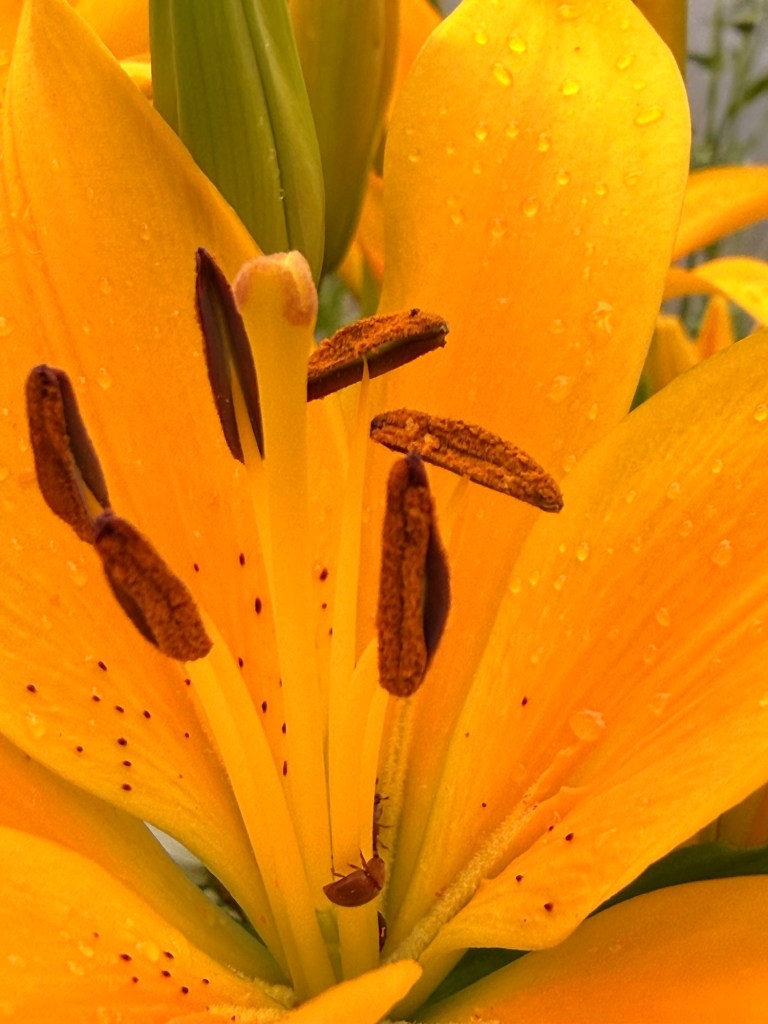
The location could hardly be more beautiful. The lilies grow just a few metres from the water’s edge, where the lake reflects the changing skies throughout the day. Early in the morning, when mist rises from the water and drops of dew cover the petals, they create scenes that almost look like paintings. Sometimes I simply stop what I am doing, sit quietly nearby, and admire them. Gardening is not always about creating something new—it is also about learning to appreciate what is already there.
Lilies belong to one of the world’s most diverse groups of flowering plants. The genus Lilium contains well over one hundred wild species, and thousands of cultivated varieties have been developed over the years. They come in almost every colour imaginable, including white, yellow, orange, pink, red, and deep burgundy. Some varieties have a strong, sweet fragrance, while others are almost scentless. Their flowers can face upward, outward, or gracefully downward depending on the species.
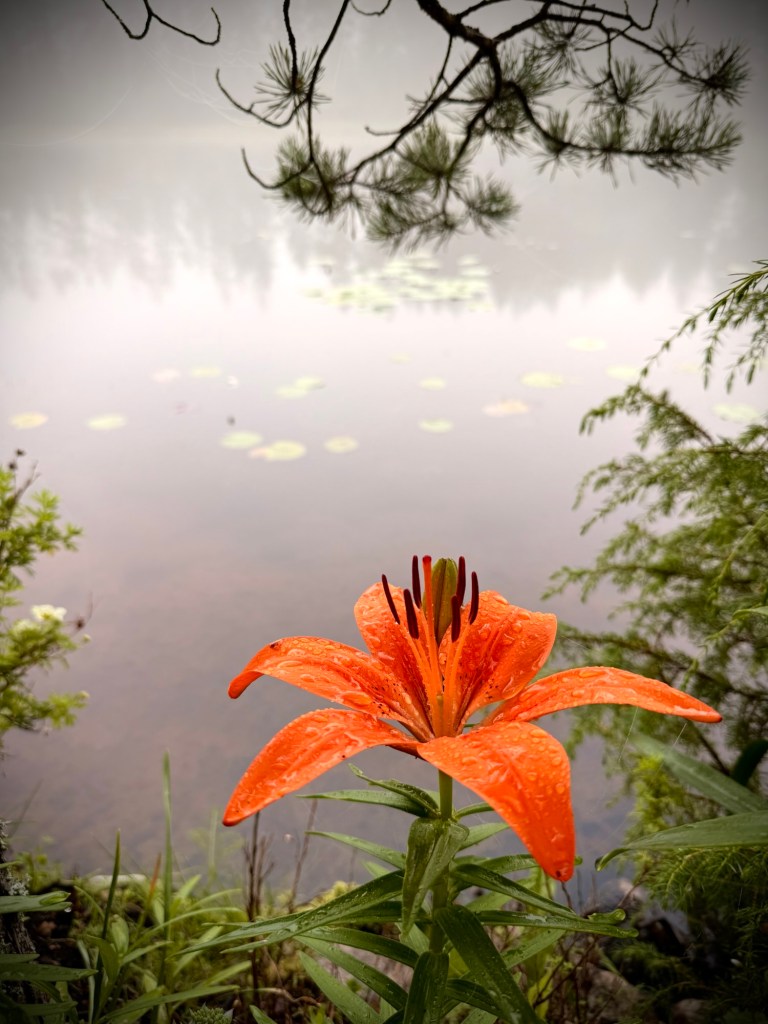
One reason I enjoy growing lilies is that they are surprisingly easy plants. They ask for very little in return. A sunny or lightly shaded location, reasonably well-drained soil, and occasional watering during dry spells are usually enough. Once established, they often continue flowering reliably for many years. They fit beautifully into cottage gardens, woodland edges, and mixed perennial borders, bringing both height and brilliant colour to the landscape.
Lilies also make excellent companions for many other summer flowers. Around my own lilies, wildflowers bloom naturally along the lakeshore, creating combinations that no garden designer could have planned. Daisies, grasses, and native plants all share the same space, making the garden feel relaxed and natural rather than overly formal. I think that is one of the greatest joys of gardening—allowing cultivated plants and nature to live together.
Of course, every gardener eventually faces challenges. Around ten years ago, a new enemy arrived in this part of Finland: the scarlet lily beetle. It is probably the single most troublesome pest for anyone who grows lilies. The bright red adults are easy to spot, but they are remarkably good at disappearing when disturbed. Even worse are the larvae, which quickly chew through leaves and flower buds if left unchecked. A healthy-looking lily can suffer surprising damage in just a short time.
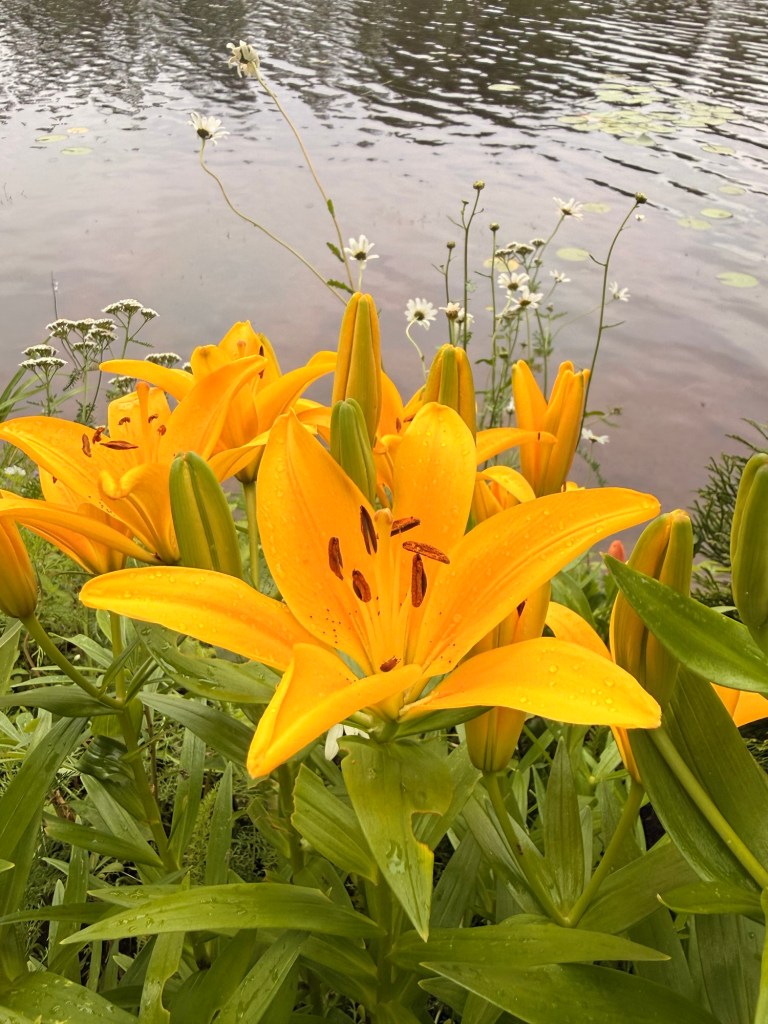
Fortunately, I have developed my own strategy. Every summer I patrol the lily patch regularly, looking for the unmistakable red beetles. Hunting lily beetles has become part of the gardening routine. It may sound like a battle, but I actually see it as another way of spending time among the flowers. A few minutes of careful inspection now and then usually keeps the plants healthy enough to produce another wonderful display.
Perhaps that is what gardening teaches best. There are always small problems to solve, whether it is pests, weather, or hungry wildlife. Yet those challenges make the successes even more rewarding. When the first lilies open each summer, I rarely think about the beetles or the work that went into protecting them. I simply enjoy the brilliant colours, the peaceful lakeside setting, and another season shared with plants that have become old friends.
For me, lilies represent much more than ornamental flowers. They remind me that beautiful gardens do not have to be expensive or complicated. Sometimes all it takes is giving an ordinary supermarket plant a chance to grow somewhere permanent. Years later, that small decision continues to reward me with spectacular blooms every summer.
As I walk along the shore, camera in hand, I often stop to admire the lilies reflected in the calm water. They have been blooming here for many years now, and I hope they will continue doing so for many more. As long as I can keep the lily beetles under control, I will happily continue my annual tradition: enjoying the flowers—and hunting a few bright red visitors along the way.
 Gardening in the North