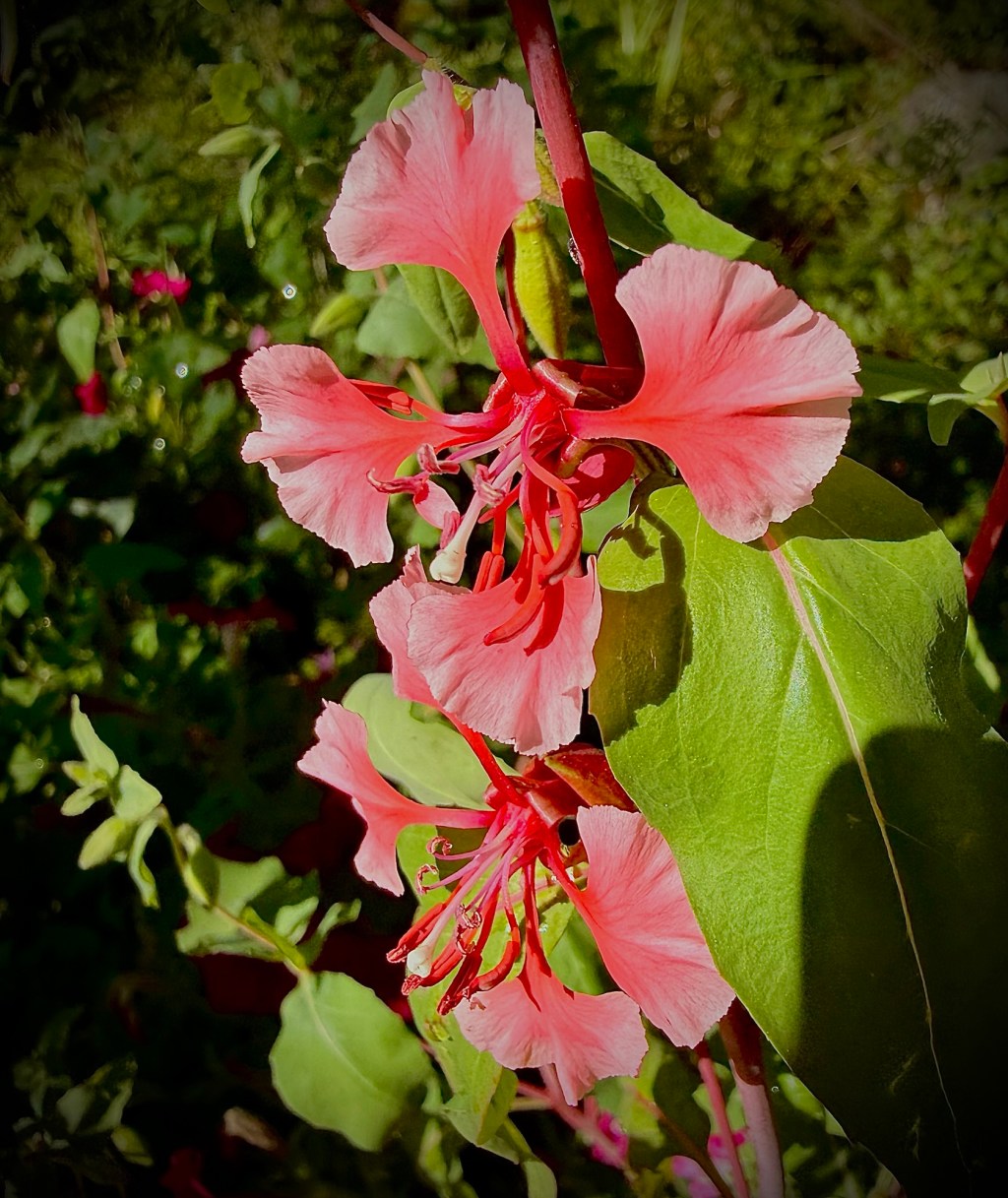

Every gardening season brings at least one pleasant surprise, and this year that honour belongs to Clarkia amoena. Although I had seen photographs of this charming annual before, this was the first time I decided to grow it myself. Looking back now, I only wish I had discovered it years earlier.
The seed packet promised a colourful mixture, but it could never have prepared me for the variety that eventually appeared in the flower bed. Every plant seems to have its own personality. Some flowers are beautifully simple with four silky petals, while others are semi-double or almost fully double, resembling miniature carnations. Walking through the garden each morning has become a small adventure because there is always another flower opening with a slightly different shape or shade.

The colour range is equally impressive. Soft whites, delicate pinks, salmon, rose and rich crimson flowers bloom side by side, creating a display that never feels artificial. Instead, the planting has a relaxed cottage-garden atmosphere that fits perfectly into my garden.
What impressed me most was how willingly the plants settled into their growing place. They seemed to enjoy the conditions from the very beginning, quickly producing healthy stems covered with buds. Once flowering started, the display continued week after week, with fresh blossoms replacing those that had already faded.
Clarkia is native to the western parts of North America, particularly California and Oregon, where it grows naturally in sunny meadows and open woodland. It belongs to the evening primrose family (Onagraceae), although its elegant flowers look quite different from the evening primroses that many gardeners know. The species was named after Captain William Clark of the famous Lewis and Clark Expedition, one of the great explorations of western North America during the early nineteenth century.

Over the years, gardeners have developed numerous ornamental forms of Clarkia amoena. Modern seed mixtures, such as the one I chose, combine both single and double-flowered varieties, creating the delightful diversity that makes every planting unique. It is impossible to predict exactly what each seed will produce, and that uncertainty is part of the enjoyment.
Growing Clarkia has proved refreshingly uncomplicated. The seeds germinate readily in spring, and once the young plants become established, they require very little attention. A sunny location and well-drained soil seem to be all they ask for. Even without constant care, they reward the gardener with an abundance of flowers throughout much of the summer.
Like many annual flowers, Clarkia is also attractive to pollinating insects. Bees and hoverflies regularly visit the blooms, adding even more life to the flower bed. Watching the flowers gently sway in the breeze while insects move from blossom to blossom creates the kind of peaceful summer scene that many gardeners hope for.

One question has already crossed my mind several times: will these flowers return next year? Clarkia is an annual, so the individual plants will complete their life cycle in a single season. However, if seed heads are allowed to mature, the plants often self-seed successfully. In favourable conditions, new seedlings may appear naturally the following spring, sometimes in slightly different places than expected. I certainly hope that happens here, because these flowers have earned their place in my garden.
One of the pleasures of gardening is discovering plants that exceed expectations. Clarkia has done exactly that. It combines elegance with reliability, produces a remarkable range of flower forms and colours, and asks for remarkably little in return. Few annuals offer quite so much variation from one bloom to the next.
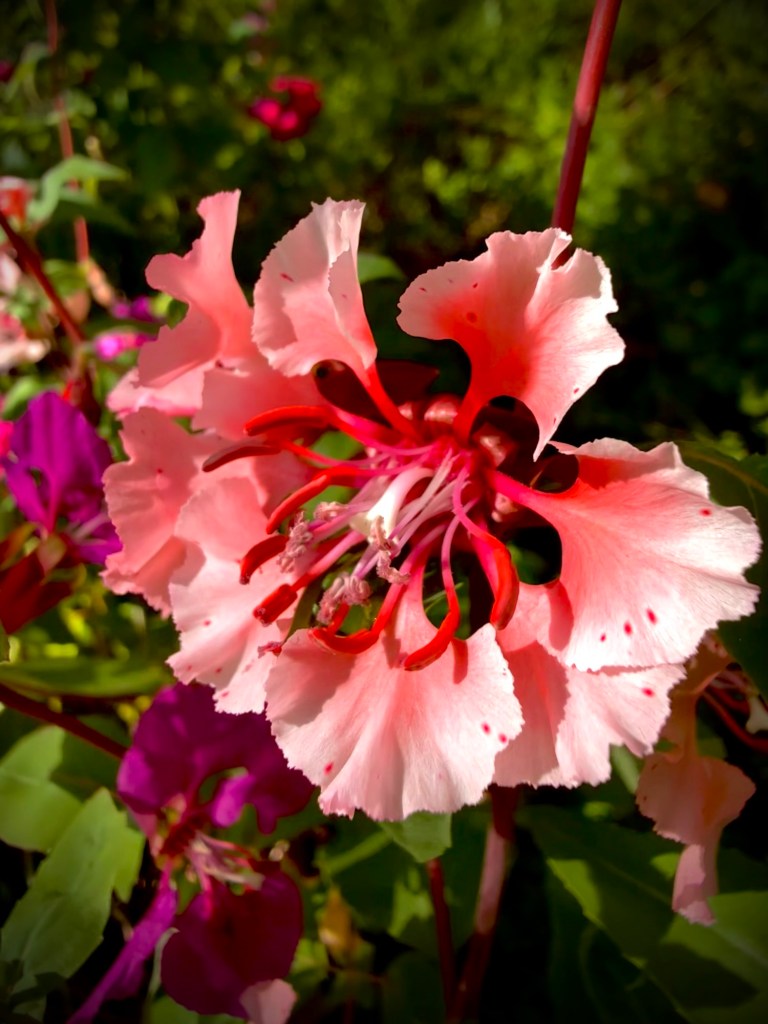
After this first season, I have little doubt that Clarkia amoena will remain part of my summer garden for years to come. Whether I sow fresh seed or allow nature to do the work, I hope these beautiful silky flowers will continue to brighten the borders every summer with their endless variety and quiet charm.


