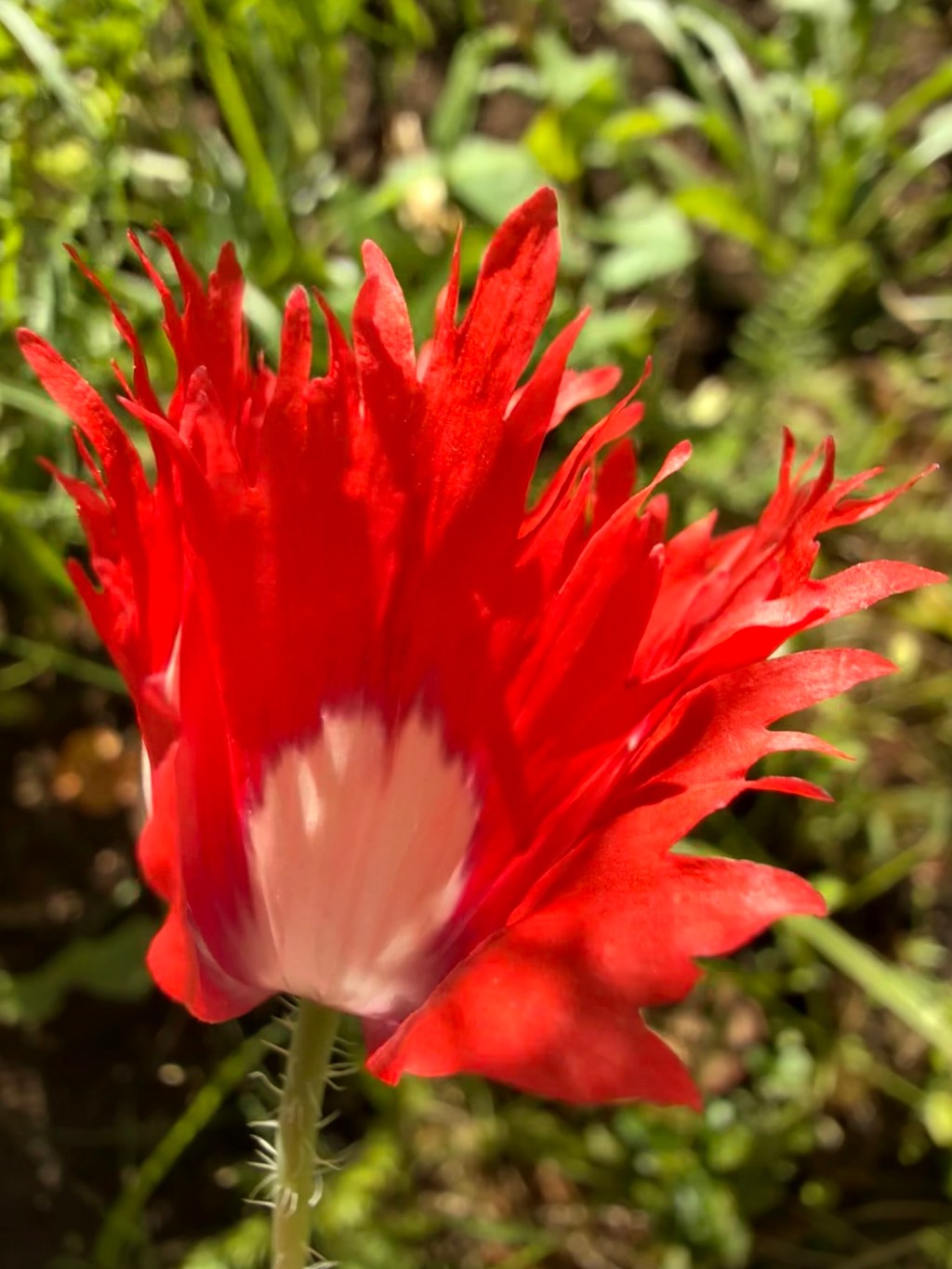
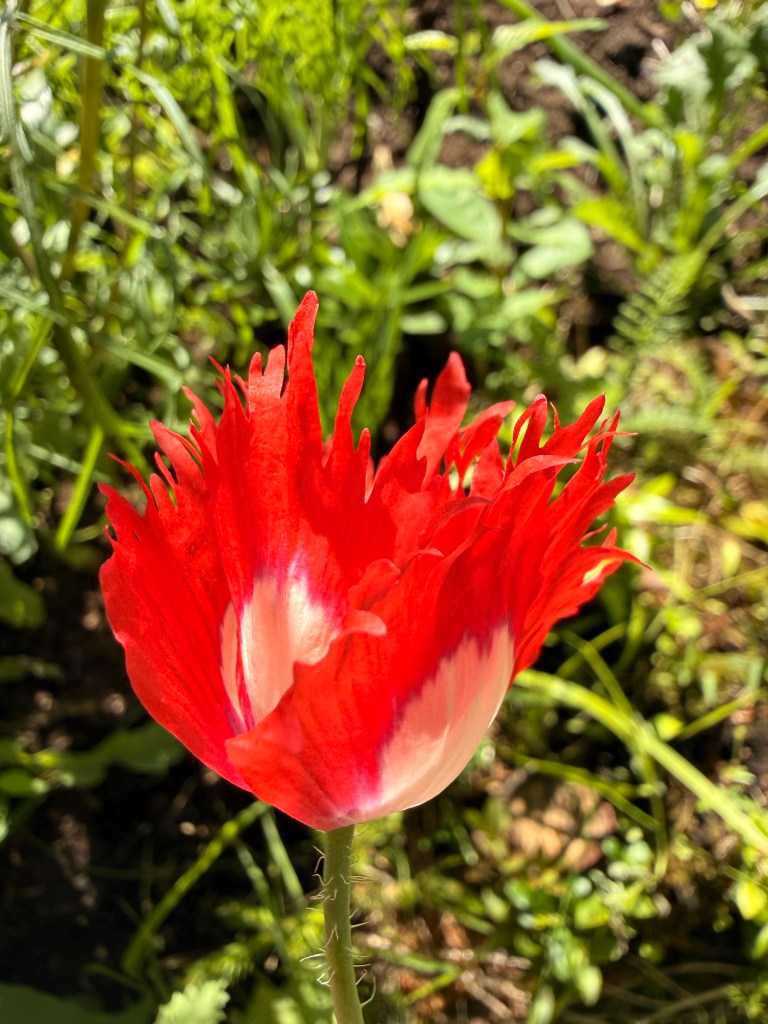
There are flowers that impress with their size, others with their fragrance, and some with their long flowering season. Then there is Papaver somniferum ‘Danish Flag’—a poppy that captures attention with one unforgettable bloom. Its brilliant scarlet petals are decorated with a striking white cross, making every flower resemble the Danish flag fluttering in a gentle summer breeze. It is one of those plants that people stop to admire, even if they know nothing about flowers.
I have been growing Danish Flag for almost ten years. Every autumn I collect the seed capsules, save the seeds through the winter, and sow them again the following spring. It has become a quiet tradition that marks the passing of the seasons. Every year I look forward to seeing the first flower open, knowing that despite its brief appearance it will once again become one of the highlights of the garden.
One of the fascinating things about this poppy is how short-lived each flower is. Individual blooms remain at their very best for only a day or two before the delicate petals fall away. At first that seems almost disappointing, but it is also part of their charm. Their beauty is fleeting, encouraging you to enjoy them while they last. Fortunately, each healthy plant produces many buds, so the display continues over several weeks.
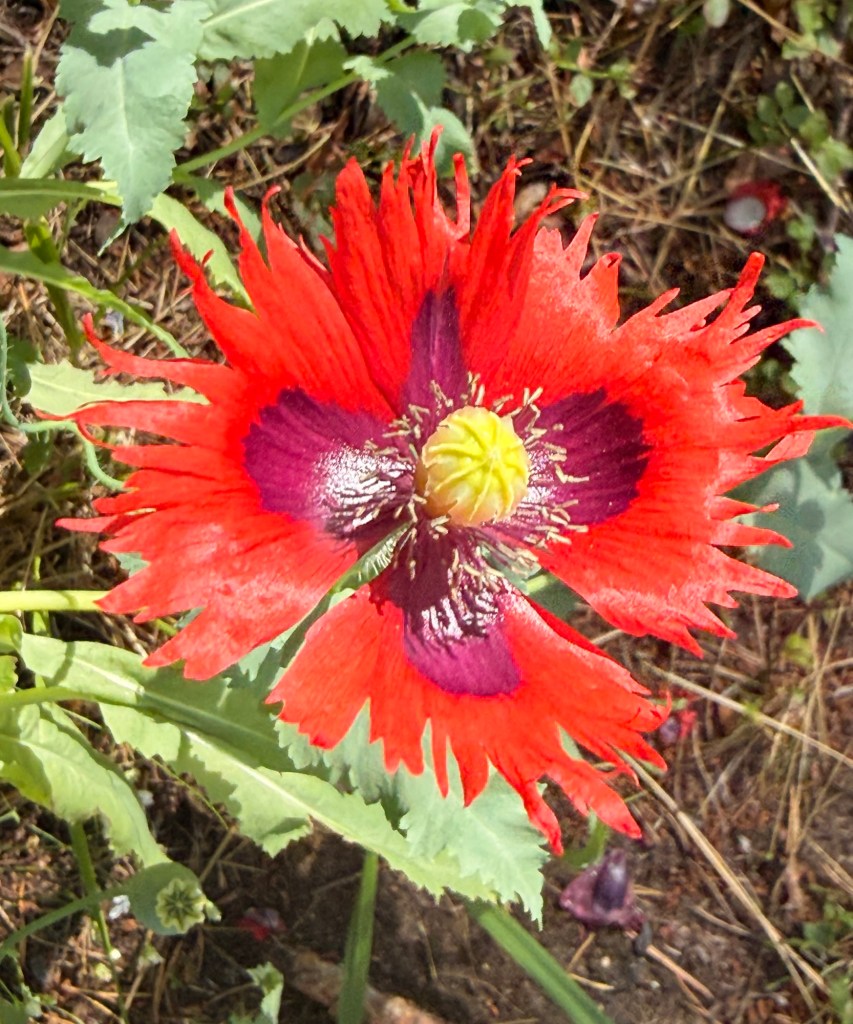
Over the years I have noticed something unexpected. Among the familiar red-and-white flowers, a new colour form appeared. Instead of the traditional white cross, one plant developed deep purple markings, giving the flower an entirely different character. It was clearly related to the original Danish Flag, yet wonderfully unique. Nature has its own way of experimenting, especially when open-pollinated plants are allowed to reseed and cross with one another. Discovering that purple variant was one of those small gardening surprises that makes growing flowers so rewarding.
At the same time, I have also begun to notice that the colours are not quite as vivid as they once were. For nearly a decade I have relied entirely on my own saved seed. While this works remarkably well, repeated seed saving can gradually introduce variation, and some of the brilliant intensity of the original strain may slowly fade. Perhaps it is time to buy a fresh packet of seeds to restore the strong scarlet petals and crisp white markings that first attracted me to this variety. Even so, there is something satisfying about maintaining a family line of flowers that has grown in the same garden year after year.
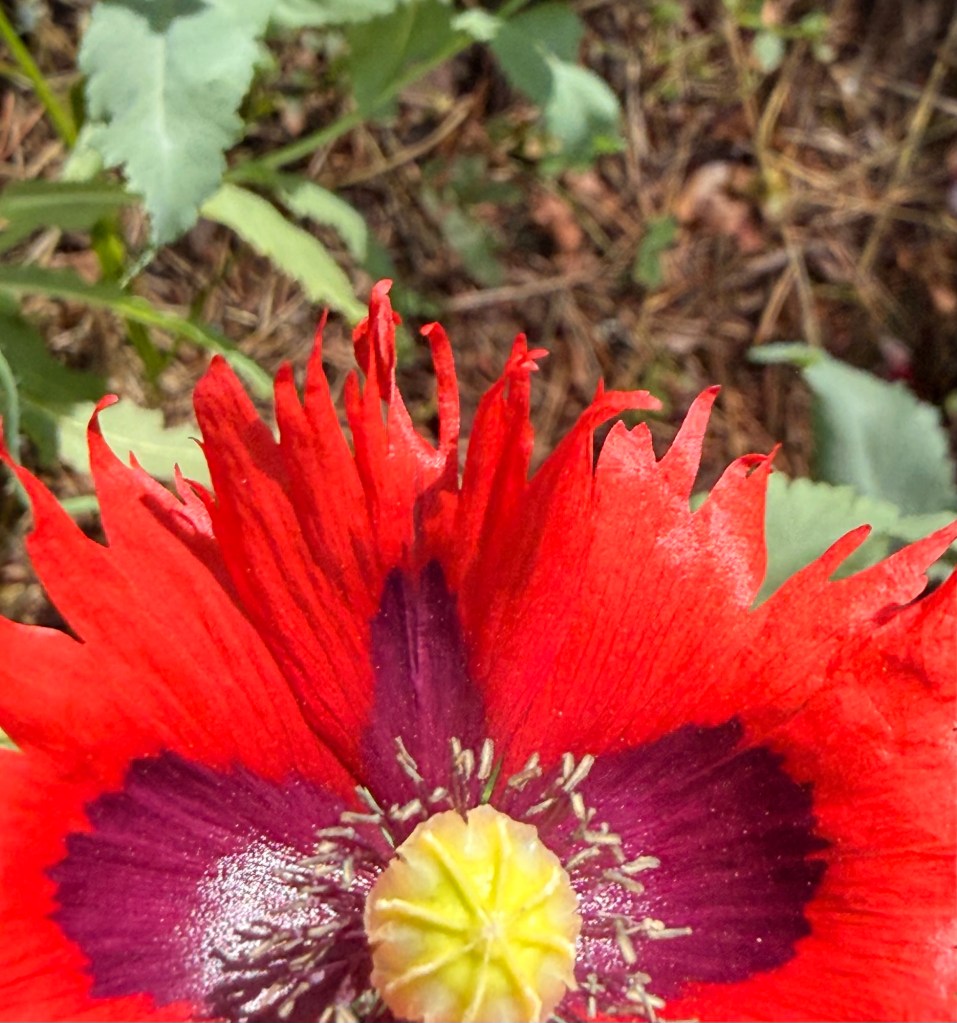
Danish Flag belongs to the species Papaver somniferum, commonly known as the opium poppy. Although the species has a long and fascinating history stretching back thousands of years, the ornamental forms grown in gardens today are valued purely for their extraordinary flowers and decorative seed heads. The species is believed to have originated around the eastern Mediterranean before spreading throughout Europe and Asia, where gardeners selected countless shapes and colours over the centuries.
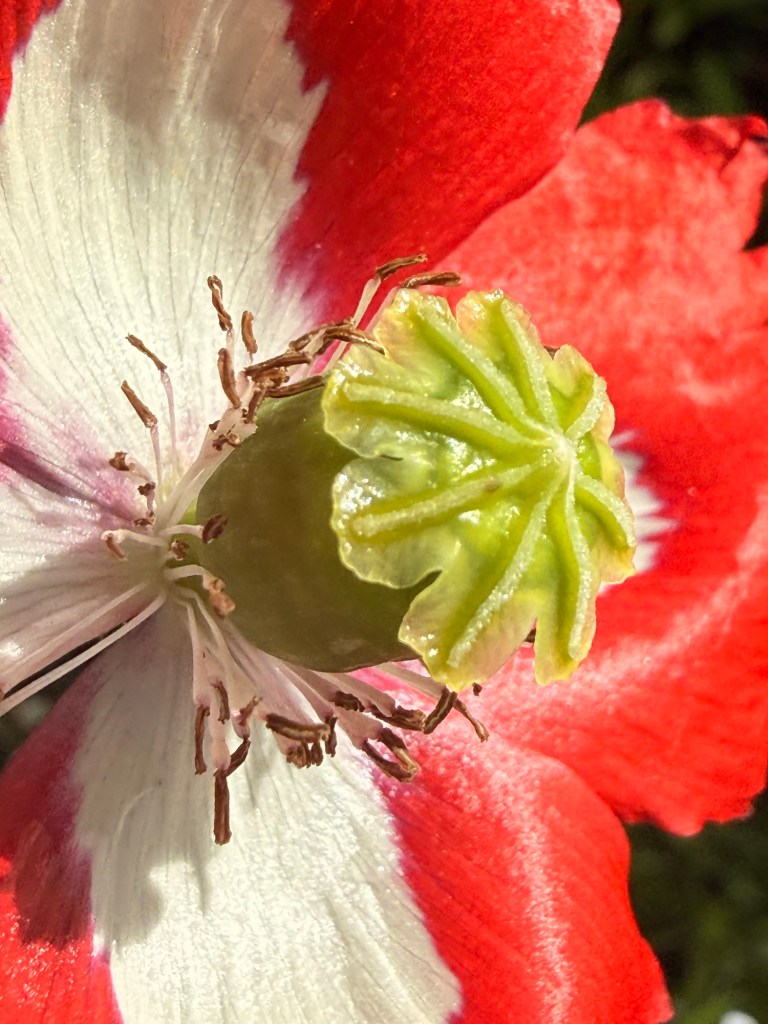
The Danish Flag cultivar is especially distinctive because of its deeply fringed petals. Unlike the smooth-edged blooms of many poppies, each petal is finely cut, giving the flowers a soft, feathery appearance. Combined with the bright white cross in the centre, the result is unlike almost any other annual flower. Even before the flowers fully open, the nodding buds promise something special.
The plants themselves are surprisingly sturdy. Their upright stems usually withstand ordinary summer weather without much support, and the attractive blue-green foliage provides interest even before flowering begins. This year has not been their strongest performance. The growing season has clearly suited some plants better than others, and flowering has been more modest than I had hoped. Fortunately, there are still enough blooms developing to produce another crop of seeds. In gardening there is always another season ahead, another opportunity for better weather and even more spectacular flowers.
Growing Danish Flag requires very little effort. It prefers a sunny location and well-drained soil, and it dislikes being transplanted because of its long taproot. For that reason I always sow the seeds directly where I want the plants to grow. Once established, they need little attention beyond enjoying the flowers and waiting patiently for the seed capsules to mature. Allowing a few capsules to dry naturally ensures a fresh supply of seed for the following year.
The seed heads deserve admiration in their own right. After the petals have fallen, elegant rounded capsules remain, gradually turning from green to pale brown. Inside are hundreds of tiny seeds, each carrying the promise of another summer display. Collecting them has become almost as enjoyable as watching the flowers themselves. It is a satisfying reminder that every season leaves something behind for the next.
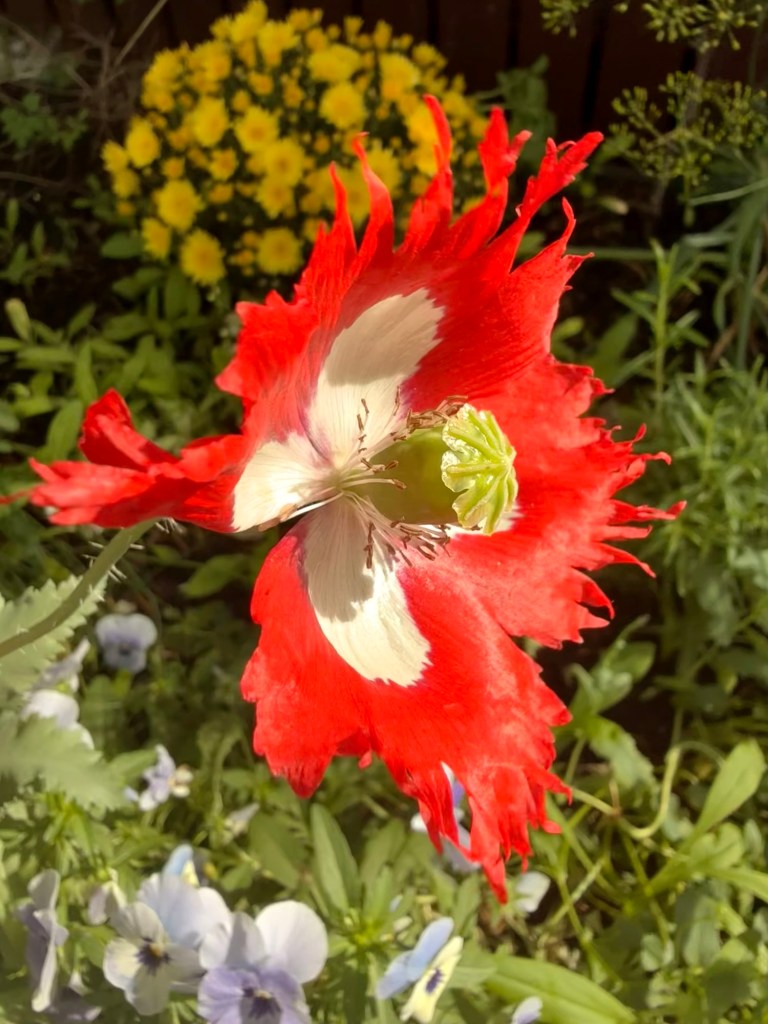
Some flowers become favourites because they bloom for months. Danish Flag has earned its place in my garden for exactly the opposite reason. Its flowers appear only briefly, yet they are unforgettable. Their vivid scarlet colour, elegant fringed petals, and striking cross make every bloom feel like a small celebration of summer. Whether the flowers open in the classic red-and-white pattern or surprise me once again with the unusual purple variation, they remain among the most distinctive annuals I grow. After nearly ten years, I still look forward to their return every summer—and I suspect I always will.

