Every garden has its faithful companions. Flowers that never seem to disappoint, no matter what kind of summer nature decides to offer. For me, one of those companions is Cosmos bipinnatus, the common garden cosmos.
The seeds I grow today have a history of their own. They came from one of my mother’s colleagues more than twenty years ago, and ever since then they have been part of my garden. Every autumn I collect the seeds myself, carefully saving them for the following spring. It has become a tradition that connects one growing season with the next, and every packet of seeds carries a little piece of history.
There is something deeply satisfying about growing flowers from seeds that have been passed from gardener to gardener instead of buying a new packet every spring. After so many generations, these cosmos almost feel like they belong to this garden. They have adapted to my routine, my flower beds, and perhaps even to the northern summers that greet them every year.
Originally native to Mexico and parts of Central America, Cosmos bipinnatus grows naturally in open, sunny landscapes where it flourishes in well-drained soils. Its ability to thrive in warm conditions while tolerating periods of drought has helped make it one of the world’s most popular annual flowers. Despite its graceful appearance, cosmos is surprisingly hardy, requiring little care once established and often producing its best display in modest, unfertilized soil. These qualities have made it a favourite among both experienced gardeners and beginners alike.
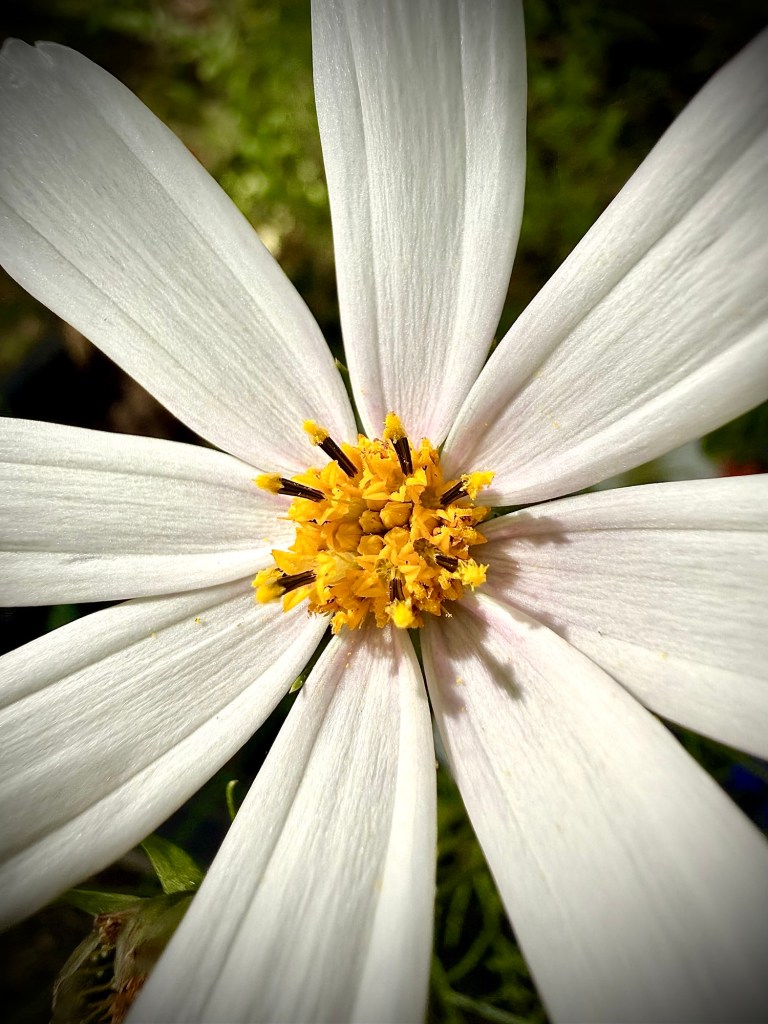
Many beautiful cultivars have been introduced over the years. Today you can find cosmos in brilliant crimson, rich magenta, soft lavender, pure white, apricot, and even double-flowered varieties with intricate petals. They are all attractive in their own way, but I have always preferred the traditional single-flowered form. In my experience, it begins flowering noticeably earlier than many of the more heavily bred cultivars. Living this far north, every extra week of flowering is precious, and the classic variety rewards that patience year after year.
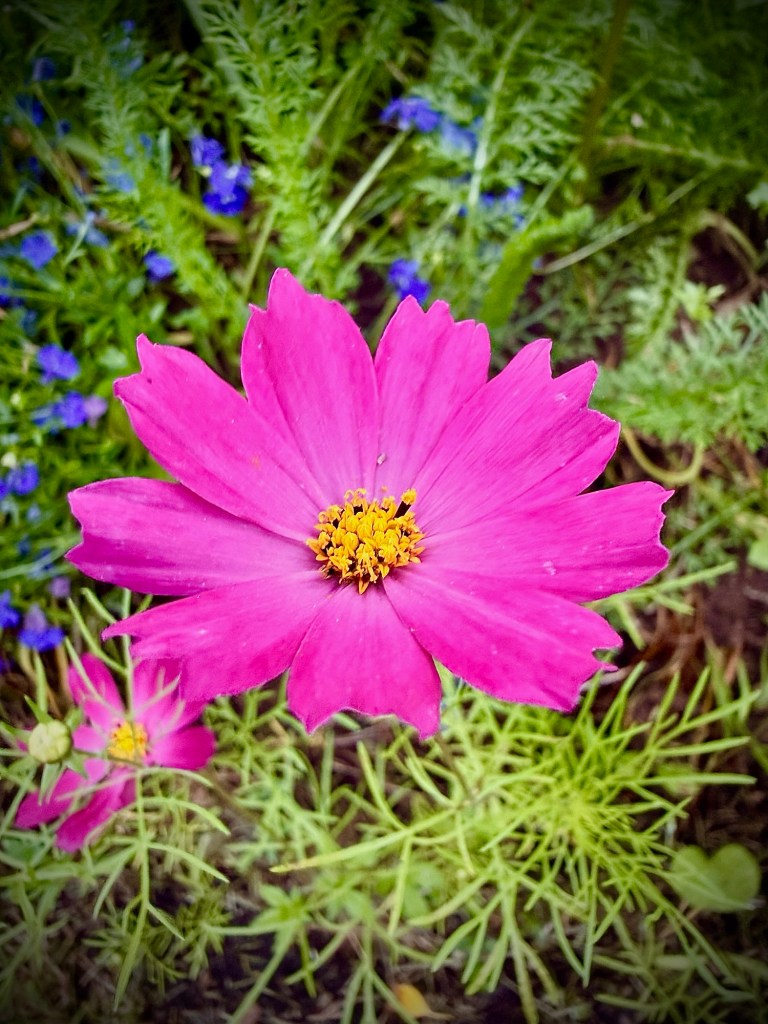
This summer is no exception. Several of my flower beds are filled with cosmos, and they have once again become one of the highlights of the garden. Their tall, graceful stems sway gently in the breeze, creating movement among the other flowers. The finely divided foliage is almost as beautiful as the blossoms themselves, giving the plants an airy elegance that heavier garden plants often lack.
One of the things I appreciate most about cosmos is how effortlessly it blends into almost any planting. It looks equally at home growing beside marigolds, cornflowers, zinnias, poppies, or ornamental grasses. Even a single plant can add height and softness to a border, while a larger group creates an informal meadow-like feeling that never seems overly planned.
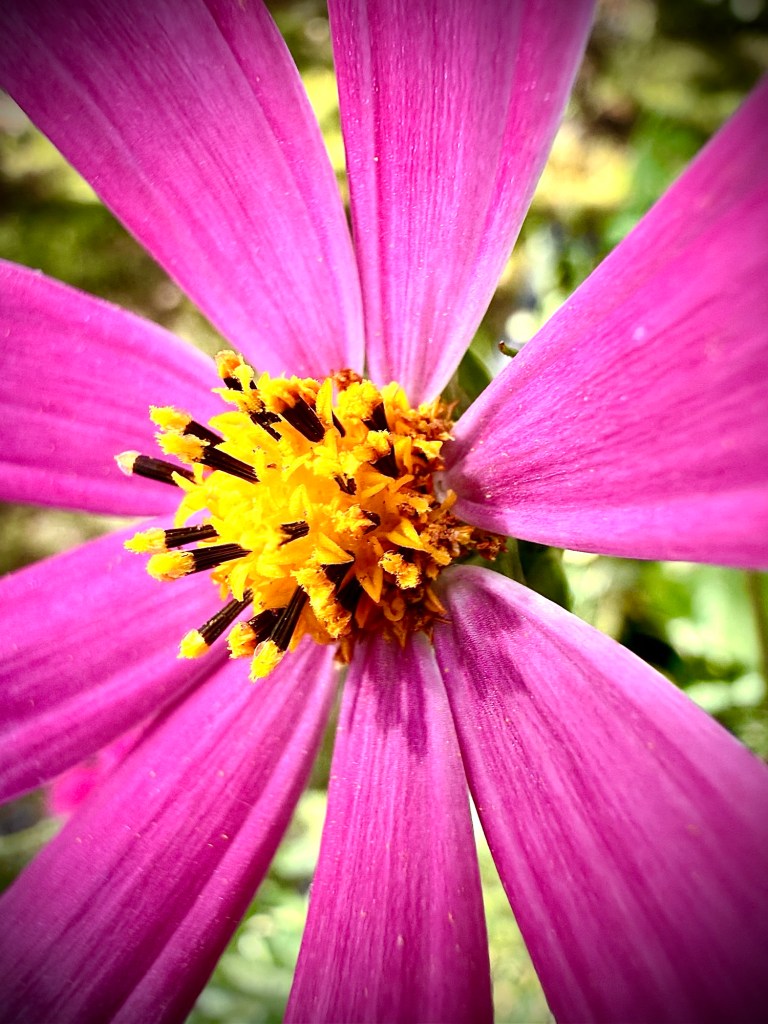
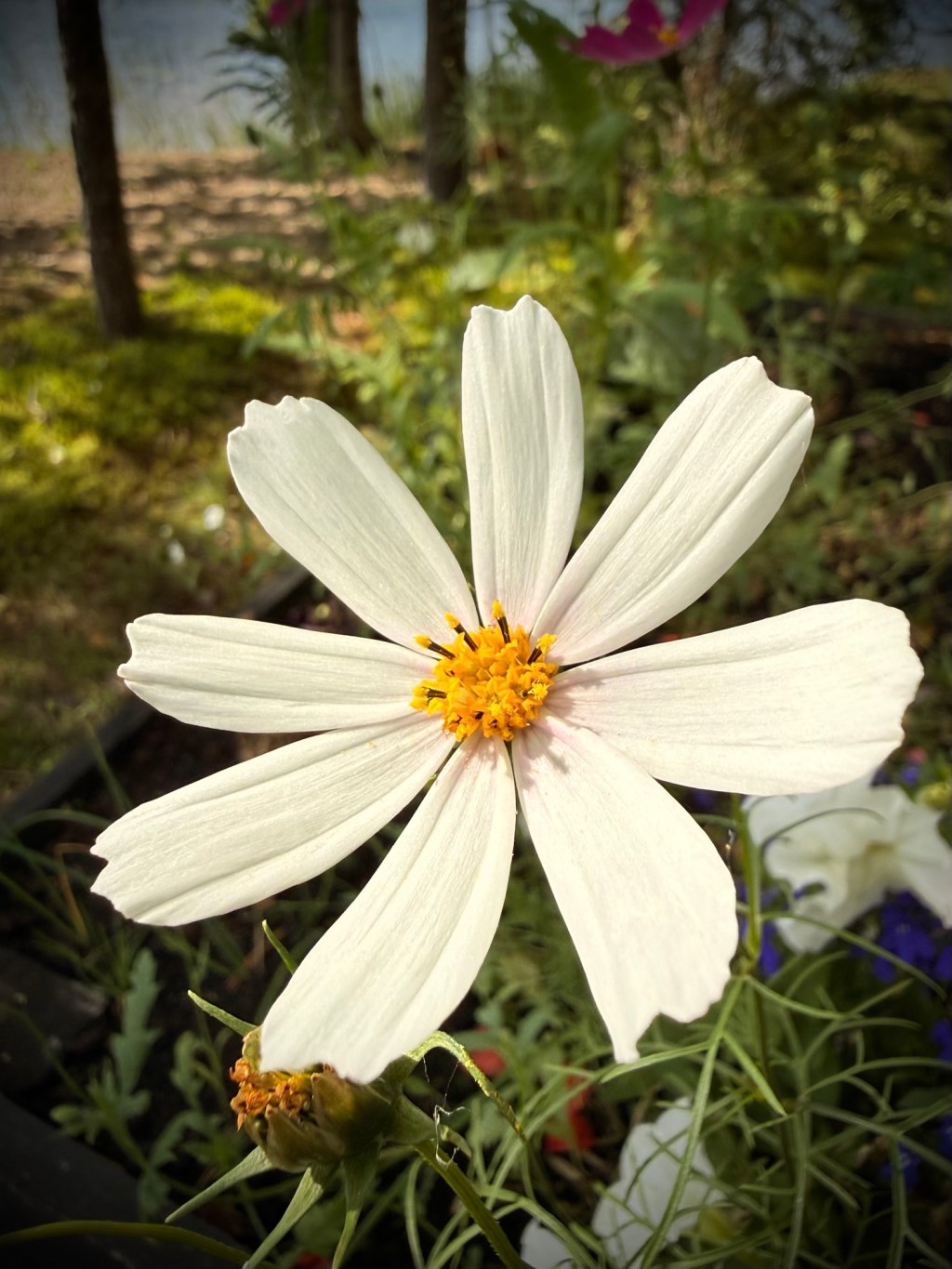
The flowers themselves are simple, yet endlessly charming. Eight delicate petals surround a golden centre, forming a perfect landing platform for bees, hoverflies, butterflies, and countless other pollinating insects. On warm summer afternoons the flowers are rarely empty, and watching the constant activity among them is almost as enjoyable as admiring the blooms themselves.
Perhaps that is another reason I never tire of growing cosmos. It does not simply decorate the garden; it brings life into it. Every flower becomes a meeting place for pollinators, turning the flower beds into a small ecosystem buzzing with activity throughout the season.
Another quality I admire is its reliability. Some annual flowers perform brilliantly one year and poorly the next, depending on the weather. Cosmos has never behaved that way in my garden. Whether the spring arrives early or late, whether the summer is warm or cool, it always manages to produce a wonderful display. I honestly cannot remember a single season when it has let me down.
Saving seeds is one of the greatest pleasures of autumn. Once the flowers fade, the seed heads mature into slender, dark seeds that are easy to collect. It is a wonderfully economical way to garden, but more importantly, it preserves the same family of plants that has grown here for decades. Every spring, those saved seeds carry memories of previous summers as much as they promise the next one.
Perhaps that is why cosmos has become so much more than just another annual flower. It represents continuity. It reminds me that gardening is not only about this year’s blooms but also about traditions that quietly continue from one generation to another. A handful of seeds shared more than twenty years ago still fills my garden with flowers every summer, proving that some of the simplest gifts can leave the longest-lasting impression.
As I walk through the garden, seeing cosmos flowering in several beds once again, I am reminded that dependable plants are often the ones we appreciate most. They ask for very little, reward us generously, and return every year through nothing more than a handful of carefully saved seeds. I cannot imagine a summer garden without them, and I hope these same flowers will continue blooming here for many years to come.