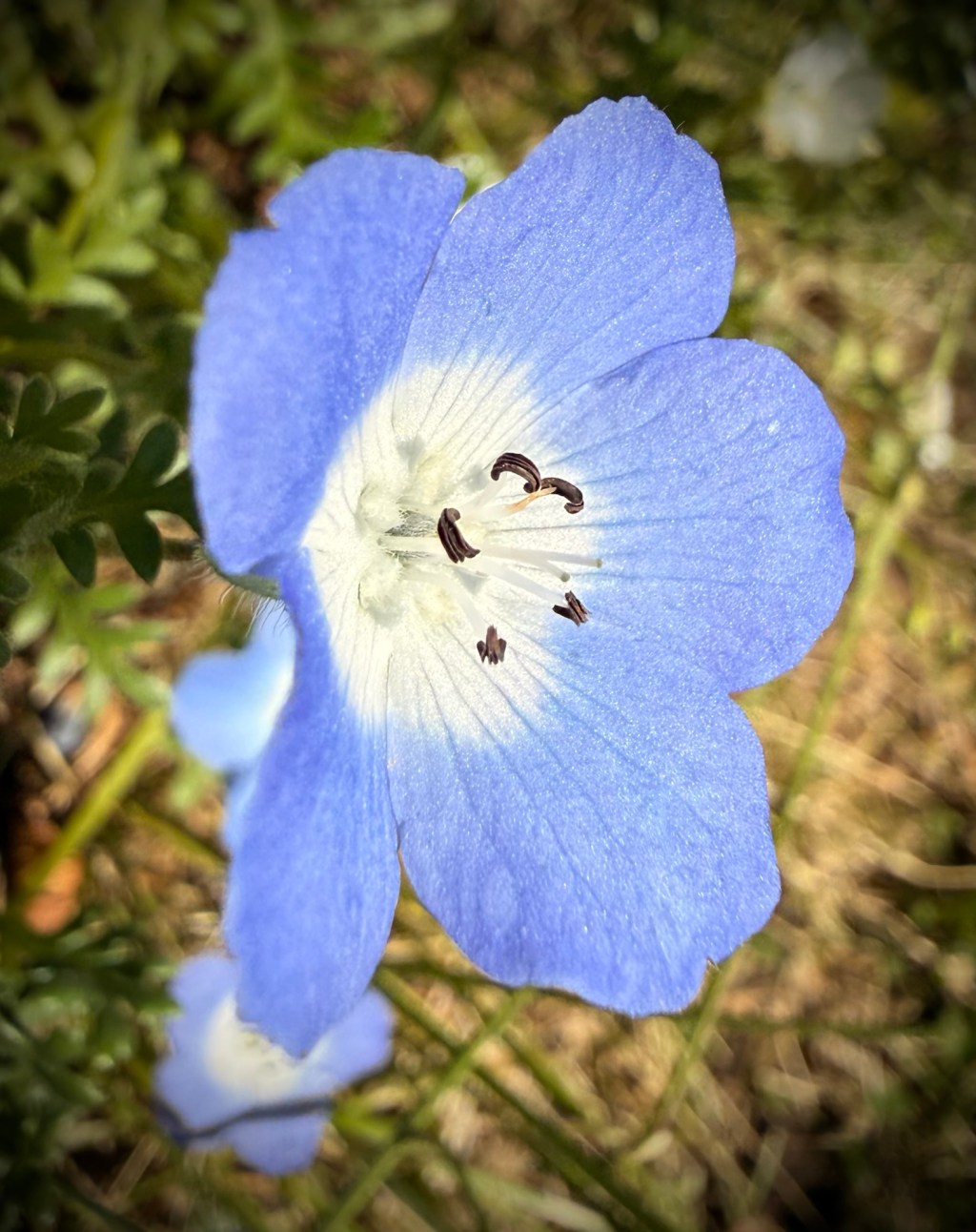

Every gardener has a few flowers that return to the garden year after year. They are not necessarily the tallest, the rarest, or the most dramatic, but somehow they always find a place in the flower bed. For me, Baby Blue Eyes (Nemophila menziesii) is one of those dependable companions. It has become one of my regulars, and every spring I look forward to seeing those first delicate blue flowers appear.
This year, however, it surprised me.
The growing season has been rather unusual. Spring arrived almost a month earlier than it normally does here in Finland, and at first everything suggested that the gardening season would be exceptionally early. Trees leafed out ahead of schedule, many perennials emerged quickly, and I expected my Baby Blue Eyes to bloom well before Midsummer.
Instead, the opposite happened.
Although spring came early, the beginning of summer remained surprisingly cool. Growth slowed, and for the first time since I started growing this wonderful annual, the first flowers failed to open before Midsummer. I had almost accepted that this would simply not be its year.
Fortunately, nature has a way of reminding us to be patient.
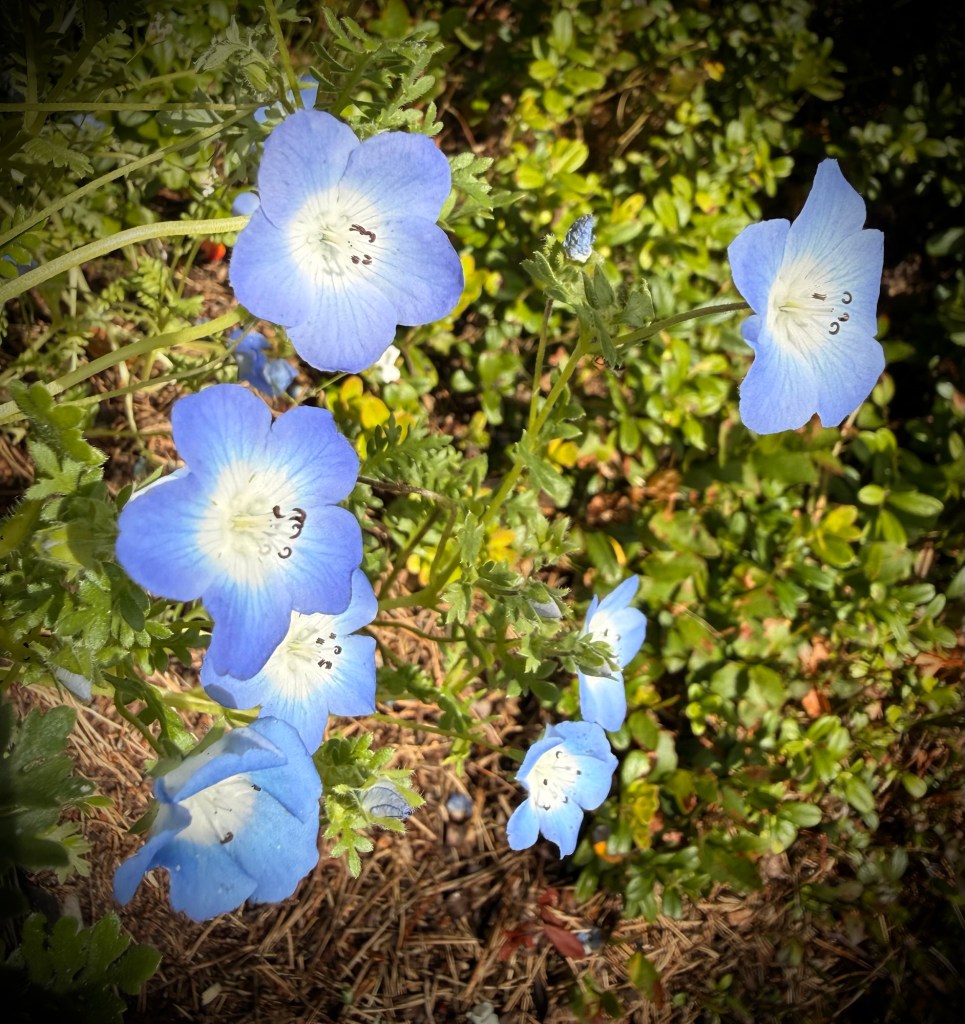
As the weeks passed and temperatures gradually became more favourable, the plants recovered beautifully. Now they are covered with their charming sky-blue flowers, creating exactly the display I had hoped for all along. The wait was certainly worth it.
Nemophila menziesii is native to western North America, especially California and parts of Oregon, where it grows naturally in open meadows and grassy hillsides. During spring, entire fields can become carpeted with these soft blue blossoms, creating breathtaking landscapes that attract visitors from around the world. It is easy to understand why this humble little flower has become so popular in gardens far beyond its native range.
One of the things I appreciate most about Baby Blue Eyes is how uncomplicated it is to grow. It asks for very little in return. A sunny or lightly shaded location, reasonably well-drained soil, and regular watering during dry periods are usually enough to keep it happy. I simply sow the seeds directly into the flower bed in spring and let nature take care of the rest.
It germinates readily and develops into neat, low-growing plants that gently spread across the soil. Because it stays relatively compact, it works wonderfully along the edges of borders, in cottage gardens, or even in containers. It also mixes beautifully with other annual flowers without overwhelming them.

Of course, the real attraction is the flower itself.
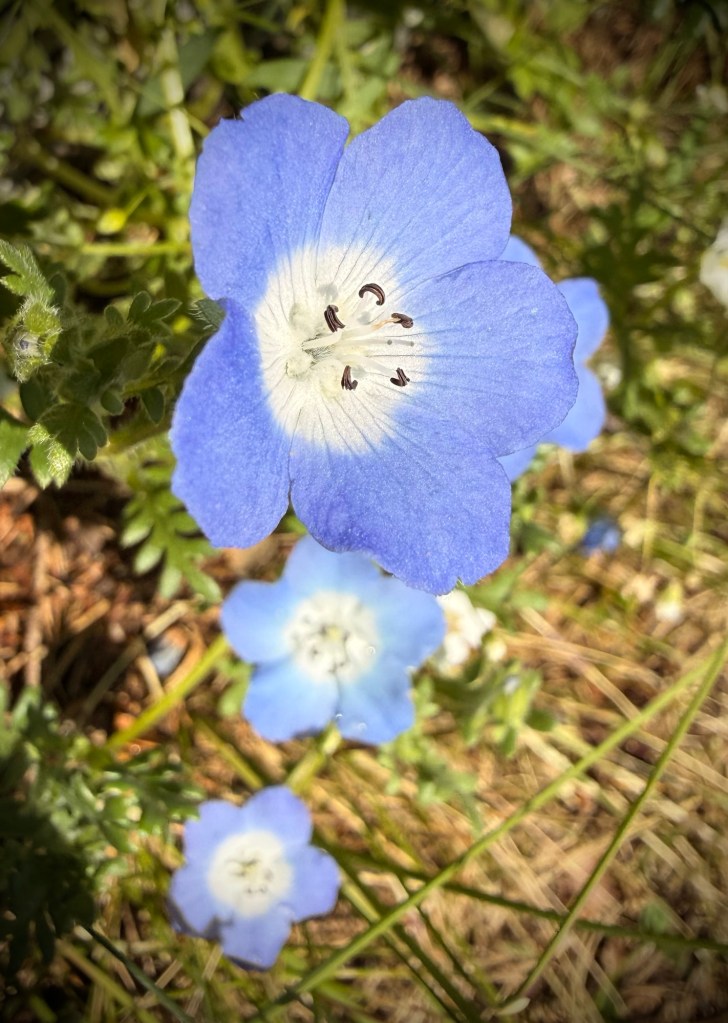
The colour is almost impossible to describe perfectly. It is not a deep blue and not quite pastel either. Instead, it has a soft, clear sky-blue shade with a delicate white centre that almost seems to glow in the sunlight. It is a colour that immediately brings a feeling of calmness. Whenever I walk through the garden and notice these little blooms, I cannot help but stop for a closer look.
Sometimes the simplest flowers are the most memorable.
Unlike many large, showy flowers that demand attention, Baby Blue Eyes quietly complements everything around it. It creates harmony in the flower bed, softening stronger colours and making neighbouring flowers appear even brighter. Whether growing beside white flowers, pink blossoms, or vivid orange annuals, it always seems to fit perfectly.
Another reason I continue growing it every year is its long flowering period. Once established, it produces a steady succession of blooms for weeks, especially if the weather remains reasonably cool. Here in the North, where every flowering week feels precious, that reliability makes a tremendous difference.

Pollinators seem to appreciate it as well. Bees and other beneficial insects frequently visit the flowers, adding even more life and movement to the garden. Watching a small bee move from one delicate blue blossom to the next on a warm summer afternoon is one of those quiet gardening moments that never grows old.
Like many annuals, Baby Blue Eyes often rewards the gardener with self-sown seedlings if conditions are favourable. I always enjoy discovering a few unexpected plants appearing the following spring. They are little gifts from last year’s garden, reminding me that nature often likes to participate in the planning.
Perhaps that is one of the greatest lessons gardening teaches us.
Every season is different. Some years everything blooms exactly when expected. Other years, unusual weather changes the timetable completely. This summer reminded me that an early spring does not necessarily guarantee an early flowering season. Sometimes plants simply need more time, regardless of what the calendar says.
In the end, patience is almost always rewarded.
As I look at the beautiful blue flowers now dancing gently in the summer breeze, I have already forgotten my disappointment from Midsummer. Baby Blue Eyes once again proved why it remains one of my favourite annual flowers. It is easy to grow, wonderfully reliable, and effortlessly beautiful. Most importantly, it reminds me that gardening is never about rushing nature. Sometimes the most beautiful displays simply arrive a little later than expected—and when they do, they are all the more appreciated.

