
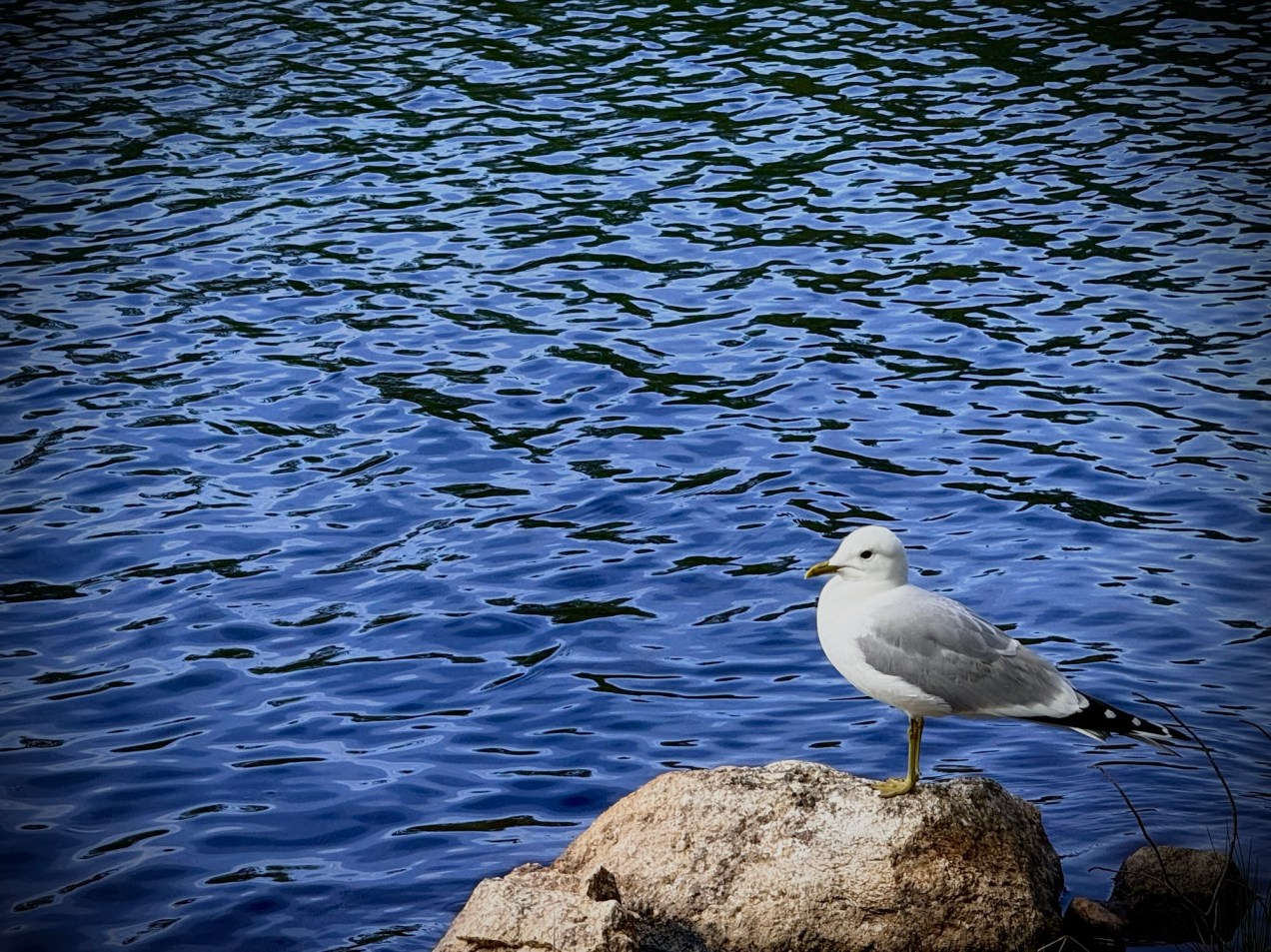
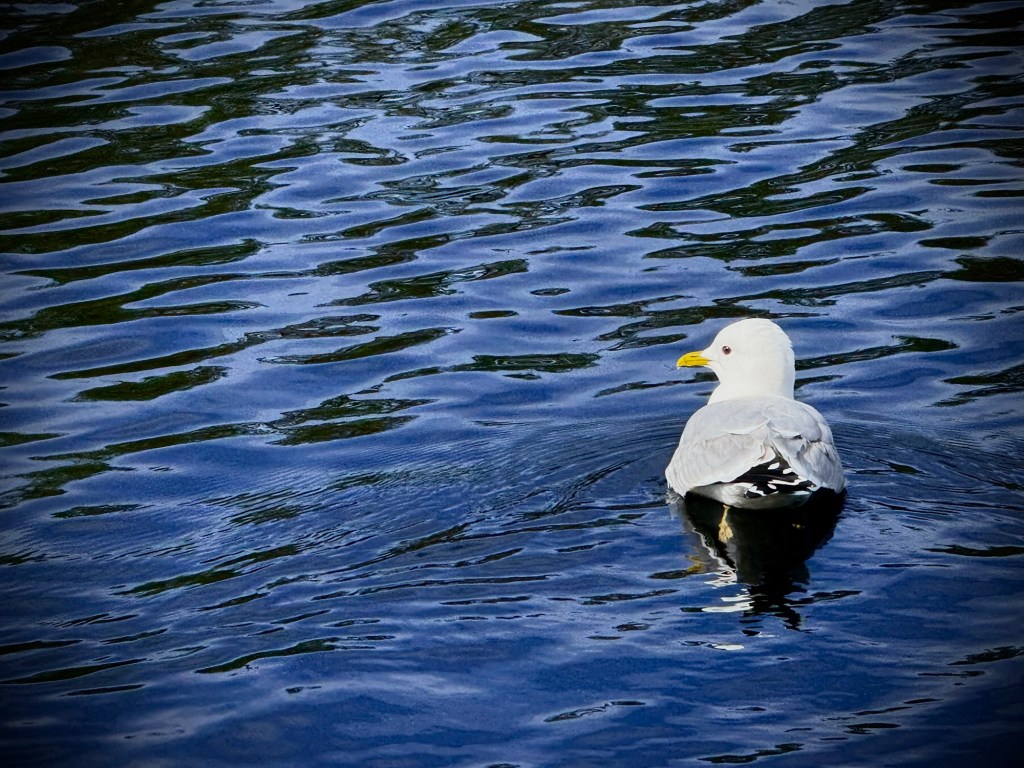
There are certain summer companions that become part of the landscape so quietly that it’s hard to imagine the place without them. Here, by the small lake, the common gull (Larus canus) has long been one of those presences.
The story goes back decades—fifty, perhaps even sixty years—when a pair first arrived. My grandmother welcomed them in her own way, scattering food and watching from the shore. Over time, the birds grew accustomed to her, and what began as a passing visit slowly rooted itself into something more permanent. Today, that single pair has grown into a small, steady community. Each summer, five or six pairs nest around the lake. No more than that—the lake sets its own limits.
Their nest lies about 200 metres from the cottage, close enough that their voices carry clearly across the water. They are not the quietest neighbours. Their calls rise early and linger long into the evening, especially when something disturbs them. Yet the noise has become part of summer, like wind in the trees or the lapping of water against the shore.
In spring, they return with remarkable precision. Common gulls winter much further south and west—many leave Finland entirely, spending the colder months around the North Sea, the British Isles, or coastal parts of western Europe. When the ice releases its grip on the lake, they come back, almost on schedule, reclaiming the same nesting spots year after year. There is something comforting in that rhythm, in knowing they will return as reliably as the seasons themselves.
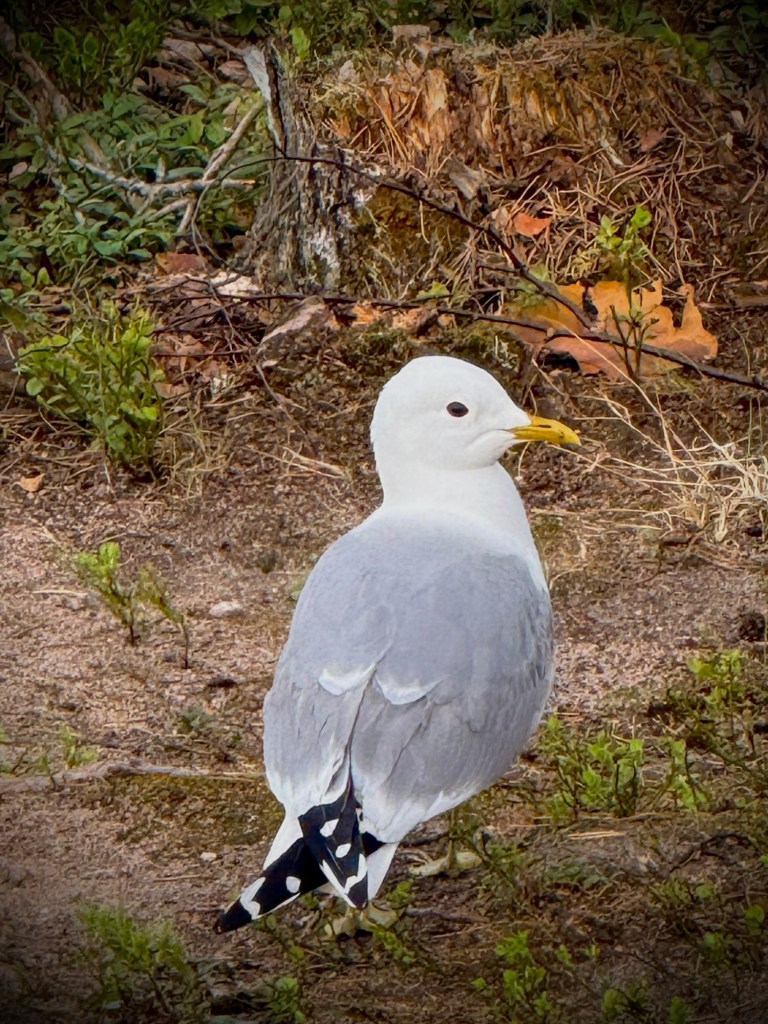
They are curious birds by nature. The pair that nests closest to the cottage has become particularly familiar. At first cautious, keeping their distance, they have gradually learned that I am no threat. Now they watch as much as they are watched—heads tilted, eyes sharp, always aware. There is a certain intelligence in the way they move and respond, a quiet negotiation of shared space.
Watching them has become a simple, steady pleasure. They drift across the lake in pairs, call to one another, rise suddenly into the air for reasons only they seem to understand. Small moments, repeated through the weeks of summer.
They are part of the place now—not visitors anymore, but something woven into the life of the lake. Noisy, curious, familiar. And somehow, each year, just as welcome as the first warm evening.
 Gardening in the North